
28th January 2025 • My Family Our Needs
As the system struggles to meet demand, Emma Steel draws from her own experiences as a parent and educator to offer practical advice, support and tips for parents, ensuring no child is left behind while awaiting diagnosis.
Research by the Children’s Commissioner shows that an estimated 400,000 children in England are currently seeking support from health services for a suspected neurodevelopmental condition. The National Autistic Society states an assessment should be issued within 13 weeks. However, data collected between June 2023 and June 2024 shows that of those waiting for an assessment, 86% have been waiting longer.
A Community Network report, analysing waiting times in the NHS for all SEND diagnoses finds that the worst waiting time for an initial assessment from the Community Children and Young People’s Service can be, at its worst, 40.3 weeks.
Dame Rachel De Souza, Children’s Commissioner for England, has said that these statistics reign true as the system ‘is working against itself by forcing families to jump through multiple hoops in a complex and lengthy process of assessment, diagnosis and intervention’ (2023).
In her 2022-23 Children’s Mental Health Services report, De Souza spoke to a million children and young people across the country. The insights revealed that a growing group of children are not getting their varying needs identified, assessed and diagnosed, resulting in a lack of the support they need at home, school and in the wider community.
The process of diagnosis
Being told by teaching staff at parents’ evening or even suspecting that your child may need additional support can be scary. Whilst the wealth of information on the internet is somewhat helpful, it can be overwhelming to say the least! It is hard to know exactly the right course of action to take.
In my experience, the process was long and complicated. Questionnaires and observations are needed from a wide range of educational and health professionals. Whilst I agree that each child deserves a thorough diagnosis, what happens to those young people awaiting an assessment and needing support?
It is easy to feel inadequate as a parent when you do not know how to support your child or who to turn to for advice. Endless websites and leaflets do not hold the answers you are looking for. There are more practical steps you can take as a guardian on your child’s journey towards a diagnosis.
Practical tips for supporting your child’s journey to diagnosis
Seek support from:
- Special Educational Needs Co-ordinators (SENCo): SENCos are responsible for the day-to-day operation of each school’s SEND policy. All mainstream schools are legally obliged to appoint a teacher to be their SENCo. Your SENCo should be able to provide your child with a Pupil Passport. This should include any information that a teacher needs to know in order to fully support a SEND child in their class, including individual needs, support needed, likes and dislikes and goals and aspirations.
- The class teacher: This can be at parents’ evening or through a specifically organised meeting. Teachers are trained to implement support strategies, so discussing your child’s challenges allows for targeted solutions that enhance learning both at school and at home.
- The school community: Get support from other parents who may be in a similar situation to you. Just talking to someone who knows how you feel can be an incredible support to you and your child.
- Charities: SEND charities such as BRAAIN offer specialist information and support. Your GP or SENCo can lead you in the correct direction. Generally, a charity that specialises in your child’s specific needs is a safe bet.
- Family and friends: Your nearest and dearest are invaluable whilst forming a support network – do not be afraid to ask for the help that you need.
Tips:
1. The golden rule – be consistent
For strategies to work, consistency is the key. Once a child understands that a certain approach happens at home and school, it is more likely to be successful. Clear outlines of these strategies that are followed without deviation get the best results for the child.
2. Routine and clear expectations
Routine can make a child feel safe. In a world where time can be confusing, routine helps ensure a child feels in control. Clear expectations also help a child to understand what is expected of them and what their boundaries are.
3. Celebrate the small wins and find learnings in every task
Learning is difficult for many children, so it is important to positively reinforce your child throughout the process. Taking part in group discussions, answering questions or even writing a sentence are huge achievements. Always celebrate small wins throughout the process. This will heighten their confidence and sense of achievement.
4. Mistakes are great!
I encourage making mistakes! It is all part of the experience. Mistakes should be seen as a learning curve and not as a failure.
5. Help your child find hobbies
Sometimes children may not be academic, but perhaps they are a wonderful dancer or enjoy inventing things. Grasping these skills and building on them can be a huge motivator for young people who find the academic day-to-day to be a challenge.
6. Love and support
Need I say more? Even at the hardest of times, love and support should be an undercurrent in a child’s life. This alone speaks volumes.
7. Set aside time to do the things you love together
It is key to nurture positive mental health, both for children and parents. Finding time to pursue the things that you enjoy provides balance to a busy day filled with expectations. Taking time to do the things we love together is even more beneficial. With my son’s ADHD, I’ve found that spending even just 10 minutes a day doing something enjoyable together makes a big difference.
My experience
As a bookworm, some of my favourite memories with my child are of reading together – it’s a small thing, but it’s brought us so much closer. However, for a long period of time, this was not possible.
Having worked in specialist education for 17 years, I found the lack of accessible literature for people with varying learning disabilities slim. Teaching staff had to adapt texts into multiple accessible versions in order to enable their students to enjoy the books on offer.
Shocked by the lack of accessibility, Sanjee De Silva, Publisher at Sweet Cherry Publishing, entrusted me with creating Every Cherry – a publishing imprint dedicated to making reading truly accessible for all.
Every Cherry Publishing
Every Cherry Publishing has worked tirelessly to ensure there is a book for everyone in a format that best suits them. From our dyslexia-friendly range and our symbolised board books to our Stories for your Senses collection. From our inception, we’ve published no less than 28 accessible titles, with our list doubling into 2025 and beyond.
Having now won an award in the publishing world, Every Cherry is continuing to make a splash and grow, becoming a driving force in representing accessible literature.
The time spent waiting for a diagnosis is challenging. We hope that Every Cherry can open the door to supporting your child through this uncertain time.
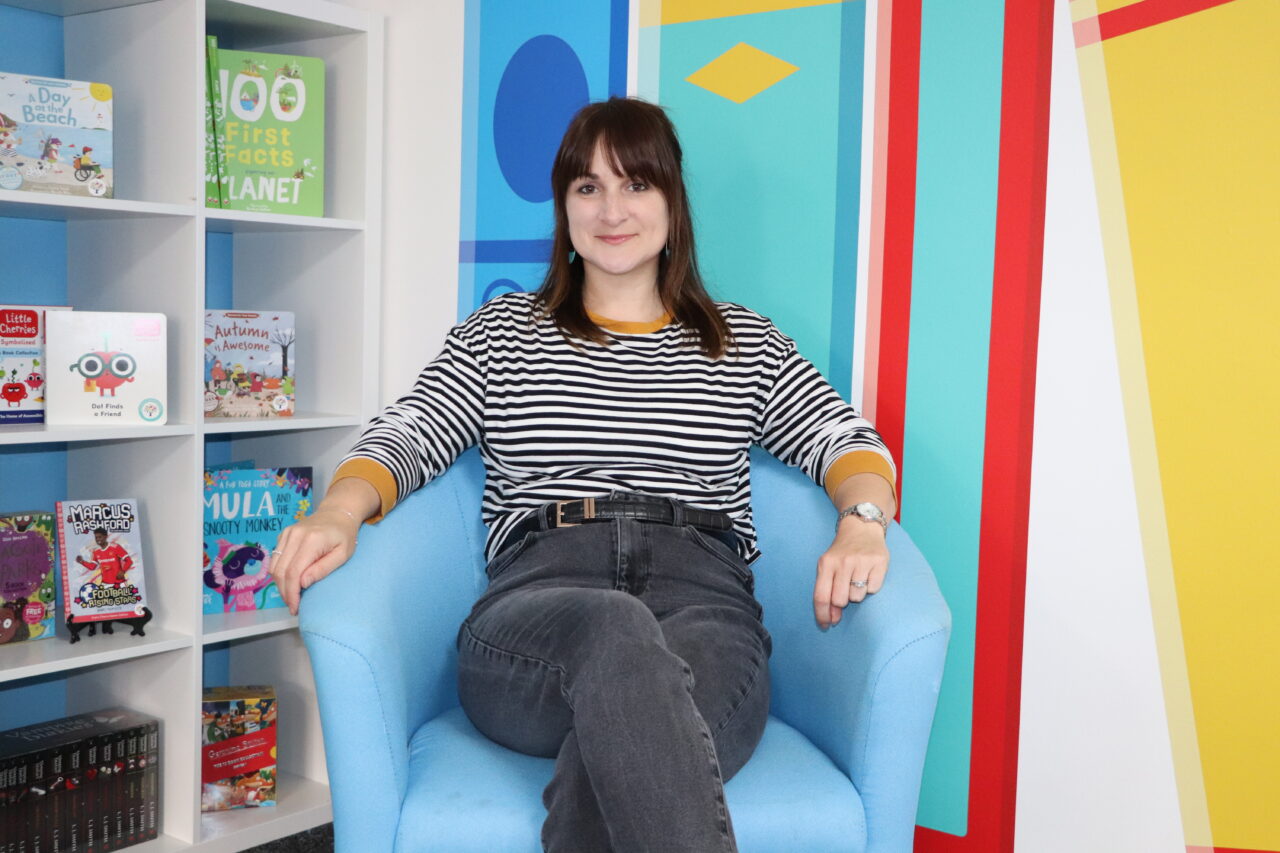
Emma Steel is the head of Every Cherry, a groundbreaking imprint at Sweet Cherry Publishing dedicated to accessible reading. Based in Leicester and a former SEN teacher of 17 years, Emma is channelling her deep experience in special education into Every Cherry’s mission: creating books that are accessible to people with learning disabilities, those new to reading, or learning English as a second language. Aside from work, Emma is a parent to a child currently awaiting an ADHD diagnosis allowing her valuable insights and experience to share with other parents navigating the same journey.