11th February 2025 • My Family Our Needs
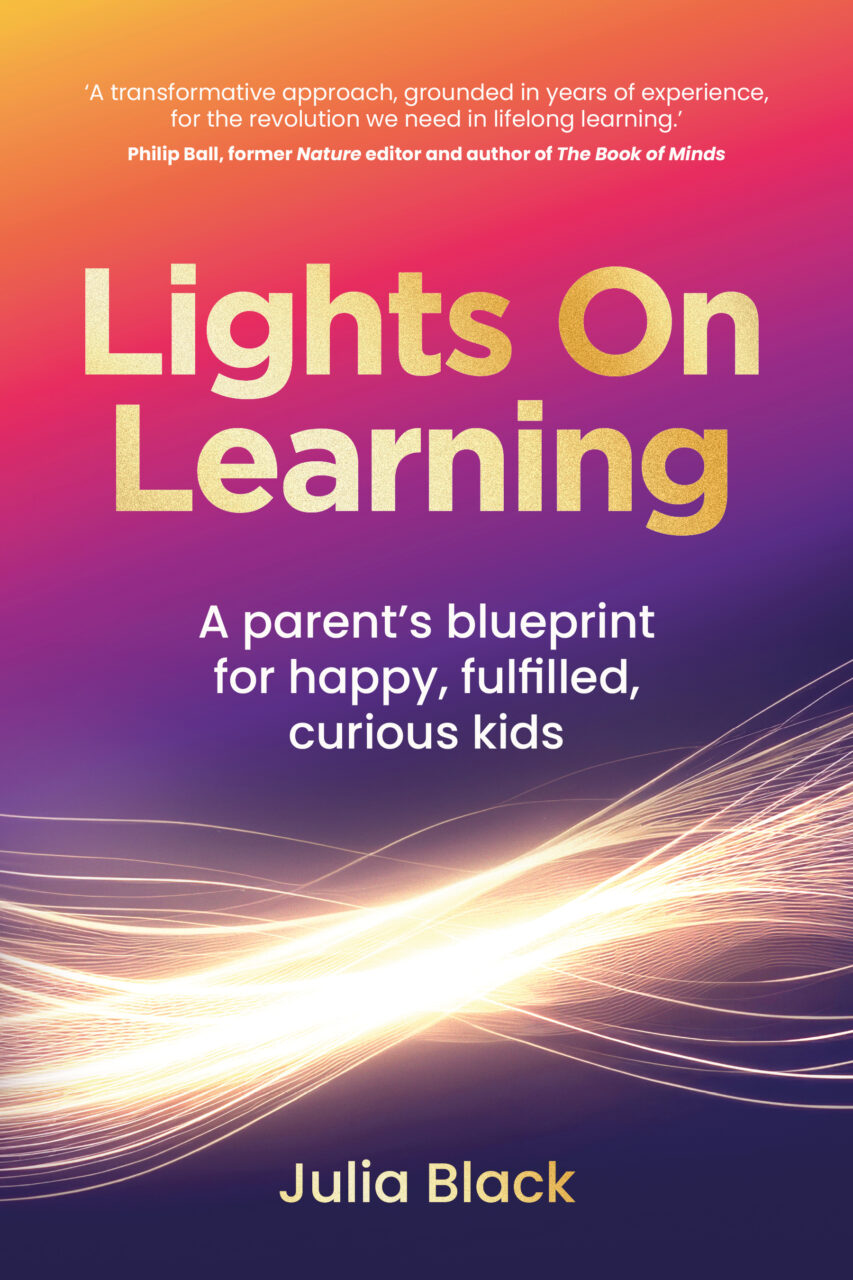
Wondering how you can re-engage your child’s passion for learning? Julia Black, author of Lights On Learning, explores some techniques for identifying talents, interests, causes of disengagement and how to turn the Lights On!
What does ‘Lights On Learning’ mean?
When you find that ‘thing’ your child is born to explore, everything changes. I call it their switch. You see it in their eyes – it is like their lights have come on. When you bring your child’s passions and superpowers into the equation, you will see them become highly engaged learners, fast. As they claim their place in the spotlight, they shine with radiance. Lights On!
When things get hard or they face a challenge, they do not give up. They dig in. They find a way to achieve at the most extraordinary level. Not because they have to, but because they want to. This is the game changer. They will want to quit at times, of course they will, but they won’t. All because of you!
Just because the professionals are failing to light up your child’s love of learning, it doesn’t mean you will. With some simple changes, you can fully express your human potential in a sustainable, healthy and inspiring way. No matter your child’s current engagement, you as their parent or carer, are the best person to switch on their love for learning, regardless of their age or how their brains are beautifully wired.
We all have something we are naturally good at
When your family learns through their passions, they become more courageous and willing to take risks. They still experience fear and cascade into darkness at times, but they learn to harness the inner power within their shadows. Guided by their own internal light, they grow in new, expansive and exponential ways. Children who lead themselves through passion-led projects naturally include a level of challenge that pushes them beyond their comfort zone and skill level. They learn to ask for support when they need it and collaborate with others to plug the gaps in their skills.
To arrive at this point of having a family of happy, engaged, self-led learners, you may first need to change your relationship with disengagement.
What if disengagement isn’t a problem in the first place?
When you think about a child being disengaged, what images spring to mind?
Head in hands. Slumped in their chair. Scrolling mindlessly on their phones. Locking themselves in the bathroom, complaining of stomach aches and refusing to go to school. Perhaps they are being disruptive. Rude. Enrolling others to behave ‘badly’ with them. Maybe you see compliance. Pleasing everyone else yet no longer seems to care about anything.
Through this lens, it is easy to judge what you see and to focus on their behaviour. After all, it’s frustrating they’re wasting so much potential. At some point, you are likely to feel that you are failing.
‘Why can’t I help them?’
That’s when you may begin your search for solutions and start believing something is wrong with your child.
My starting point with everyone I work with is to assume that nothing is wrong with them.
Is your child happy and engaged when they are doing something they love?
Are they sparkier on the weekends, during the holidays or in after-school clubs?
Are they actively telling you they are bored, hate school or find your home education dull (ouch!)?
If your answer is yes to all of these, you’re probably looking at a normal healthy reaction to being bored and disconnected from learning. We can turn this around fast. If the answers are no and they’re disengaged across the board, you might want to investigate further, but not before you’ve tried to ignite that hint of a spark and switch their lights on with a few simple steps.
Step one: Ask a simple question
Ask your child, or better still do this as a whole family, the following question:
If you could wake up every morning and do the thing you love the most, what would it be?
I am a big fan of brainstorms so get a big sheet of paper and lots of colourful pens! If they say ‘playing video games, watching YouTube videos or being on social media’, don’t dismiss it. Note it down and then ask ‘What else?’ The key here is to draw out of them what they love when they are in creator mode – being Lights On and tuning into love, joy, gratitude and wonder. What do they love doing when they are creating rather than playing someone else’s creation? If they were to design a video game themselves, which part would they like most? Coding, strategy, drawing, designing the levels?
Step two: Hold a simple activity
Set up a learning carousel – a sweet shop of creative goodies for you all to explore! A pick-and-mix of tinkering stations that offers choice, autonomy and ownership over what they explore, how they play and use their imagination. Lay different activities out in a room, your garden or throughout your whole house. You might want to include some Lego, paints, an animation station, cardboard and some maker tools, old technology to take apart, a sewing machine and dressing-up clothes. You don’t need all these resources, so if you are limited in what you have, or by space, then start small with one thing you know they like doing and one that might be a new exploration. Make your learning carousel your own, based on what you have available.
Then jump in and explore alongside them.
Step three: Collect some simple data
Give yourself at least an hour and stay curious. Make a mental note of which tinkering station you noticed where they were most Lights On. As they move around the carousel, think about these questions:
• Are they excited and highly inquisitive, or do they not know where to even begin?
• Do they head straight to one station and spend all their time there, or do they explore every station but not settle?
• Do they create digitally or physically?
Watch out for their energy levels and notice when they shift between being Lights On and Lights Off – you will see it in their eyes and their body language. You may even sense their energy shift. If your child needs a lot of your time or involvement, simply note when they ask for help. Is it when they get stuck? Is it to ask for ideas in the first place? Or is it because they are hungry and don’t want to stop what they are doing but need a snack?! The key is to be open and non-judgemental about how your family interacts and engages with the carousel and, of course, how you feel exploring, too.
Teenagers love learning too!
If you are thinking, ‘I’ve got teenagers, they are just going to roll their eyes,’ then this is likely to be a lack of confidence about your ability to enrol and lead them on this creative adventure. Get in there with them to role model your own creative energy and use this as a great opportunity to explore and create yourself.
If your child has been Lights Off for a while, put out one thing at a time to avoid overwhelm. Be assured though, I’ve worked with lots of children who don’t know what they love to do at first and it is usually a contributing reason for their disengagement. Find their switch (how they love to creatively express themselves) and you’ll see them light up almost immediately.
From rock bottom to award-winning young entrepreneur in less than a year
When Lisa came to me, her twelve-year-old son, James, was struggling academically and his mental health was at rock bottom. It was clear James was a natural entrepreneur and as Lisa brought his entrepreneurial ‘switch’ centre-stage he was able to quickly re-engage his Heartset, Mindset and Skillset into the learning process.
In just nine months, he transformed from disengaged to highly engaged and became an award-winning, celebrity-endorsed young entrepreneur. He appeared on local and national media and raised over £1K for his local children’s hospital through his social enterprise project.
This is what is possible when you bring Lights On Learning into your home: your whole family transforms. The culture of learning in the family home has the biggest impact on a child’s attitude to learning. When you rise as a leader within your family you can move from the old-school educational paradigm to one where getting your child to flourish as a learner is much simpler than you might think.

Julia is a mother to two young adults and creator of Lights On, a global community for parents who want to bring the latest thinking from neuroscience, positive psychology and passion-led learning into their homes. Her vision is of a world where all children love learning and parents are the key to that future. In addition to this, Julia is also a BAFTA and Grierson nominated documentary director, educationalist, Master Neurocoach and author of Lights On Learning.