
21st March 2024 • My Family Our Needs
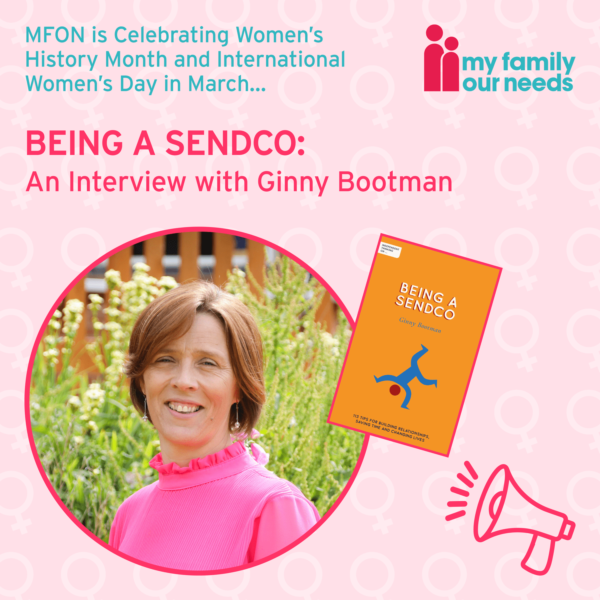
For our third interview for Women’s History Month 2024, we spoke to Ginny Bootman about some of the ideas and approaches to building relationships with parents, staff and children in her book, ‘Independent Thinking on Being a SENDCO’.
With an enthusiasm for utilising empathy and kindness with families and in schools, she shows us how taking one step back and connecting with others can be key to building trust.
1. We loved your book, ‘Independent Thinking on Being a SENDCO’! You speak about the ability to listen properly and the desire to understand the lives of others. How do you go about combining professionalism with empathy?
I think that comes down to building up trust with everyone and having transparency. When you have both of those, you can empathise alongside being professional. When we split them into two different elements, it gets difficult.
I know when Dr Brené Brown talks about empathy, she says sometimes people feel that they have to overshare and be overly vulnerable. We must have that in the forefront of our minds. How comfortable are we with sharing with others? The idea of combining professionalism and empathy isn’t one that I find very difficult because they are meshed together.
2. Would you say you’ve coined the term ‘the empathy road’?
Yes, I think I did. ‘Follow the empathy road’ was something that came about quite naturally. It is all that I’m about.
3. Talk to me about the eureka moment for you and ‘the empathy road’.
My eureka moment came when I went to some training about attachment and the pace approach. It joined the dots for me and I felt that I had heard something, after being in teaching for 25 years, which I really should’ve known and been told sooner. Then, I wanted to share what I’d learnt with others so that it joined the dots for other people so they could relate to children, parents and staff more easily.
4. Could you provide a snippet of ‘the empathy road’ in a couple of sentences?
There was an art installation in a museum in America. In this museum, you’re able to go in and put on a pair of headphones and hear somebody’s story and as you did that, you were also given that person’s shoes to walk around in. I think that’s the epitome of ‘follow the empathy road’. We don’t know what’s happened before parents come to see us. I don’t know what’s happened before I have a conversation with a child if they’ve just come from home. I don’t know what’s happened with a class teacher before they came into school this morning. So, I need to consider what may have happened and what has brought them into their state of mind when they’re with me. It’s not directed at me. It can often be as a result of something else that has happened but I’m the person they’re happy to speak to and I will listen.
‘Once again, it’s being open and transparent. Not about complaining but about explaining everything that you do’.
5. Take me through the first meeting with a child and their family and your approach to building relationships with parents.
Often, I get parents coming to see me and they’ve chosen to move their child mid school career. They can come to me in one of three ways.
- They can come and be very emotional, upset and angry. I allow them to speak to me and I listen to everything they’ve got to say. I see a sense of release that they have been able to speak to me on their terms, without me asking them questions, so they are in control of the conversation.
- Sometimes parents interrogate me. They ask what qualifications I have and how many EHCP’s I have successfully applied for and got. They want to know everything about me. Once again, I am ready for that and I am transparent and honest.
- The final one, I’ve always found a little bit tricky but I’m getting better at it. It’s when the parents come in with a folder full of information. From a SENDCO’s point of view, we don’t know what’s in that folder and that can be quite scary. So, if parents bring paperwork in, I ask them if they want to show me it, what they would like to show me and if they want me to look at it at a later date.
6. How do you navigate difficult conversations with children and their families? Do you have any examples you’d like to share?
By gauging the parents as they come in, allowing them to speak or ask me questions, barriers break down immediately. It’s all about building up trust and I often talk about the spider’s web of trust. It takes time.
When I first meet children, I try and get that connection. I see what they’re wearing or I see a toy they’ve got and I ask about that. It all comes back to connecting.
When I have parents coming for a meeting, I sit with them so we’re all at the same level. It’s a dialogue and the child is at the centre of the conversation. Parents understandably want to know that we know their children or, if we have a new parent, that we’ve found out about their child. If we can get in touch with the previous setting, that’s great. Or, during that meeting, I will ask to see the child in their current setting. The child needs to be a real person in our mind, not just paperwork.
7. You’ve spoken about the flexible classroom in your book. What are the similarities and differences between supporting a teacher and supporting the family?
Interestingly, they are quite similar. I know my teachers really well. I go into classrooms and I work alongside them so I can suggest things and we talk about what will work in their classrooms. If they say my ideas won’t work, I ask them what will. I have a different set of eyes looking at their classroom. Sometimes, they just hadn’t thought of that approach.
The same can be said with parents. Some people like meetings in person, some prefer online. Timings are also important, so I work with parents and teachers to find a time that suits them. Once again, it’s about breaking down these barriers so that when I get into the meeting, everybody is in a good place and we can have a good dialogue. By giving people different options, it becomes a conversation where everybody listens, which is so important.
‘It’s just kindness – being there to support people when they need us’.
8. You talk about the decision tree and keeping the seesaw balanced in a couple of chapters of your book. Talk to me about these and how it helps with your own decision-making process and communication.
One of the decisions I make is, does this need to be a meeting. If we are having a meeting, do I actually need to be there. I am all for empowering staff with regard to special needs. Every teacher is a teacher of special needs. It’s about making the best use of everybody’s time.
I also make everybody aware of how long the meeting will be. Everyone’s busy. Parents are working and may need to get time off. I need to make sure they’re very comfortable with the time set and sometimes we have online meetings. I do hybrid meetings too. I might be in school with one parent and another may be at work joining us virtually. If everybody’s comfortable with that, then it’s great. It’s just about having these different ways to make things more streamlined at the front of my mind.
9. How do you value the importance of time, taking things slow, pacing yourself and managing your own time as a SENDCO effectively?
I have my online calendar which is brilliant because being across 4 schools, it’s really important that I am visible in the schools so I make sure my time is organized very carefully. I’m getting better at planning meetings in the future because it works for everybody more than I ever thought it would.
I’ve done loads of things to help me with my time including the Pomodoro technique. I am also very fortunate that I have an office. When I first got an office, that was a real defining moment for me because that was my place I could go to work. Working from home also helps me get things done. I also have a huge pair of noise cancelling headphones and people are less likely to interrupt me. A lot of these things are little but they make a big difference.
I think it’s really important as SENDCOs that we share with our leaders how much time it takes to do things. In a senior leadership meeting, go through the steps of a referral or an RSA for an EHCP. Once again, it’s being open and transparent. Not about complaining but about explaining everything that you do.
‘Everyone is human and it’s just about being there together for the children’.
10. What is the importance of kindness and teaching it?
I think being kind is integral within a classroom. For over 25 years I was a class teacher. Kindness is a mirror to everybody around us and so children absorb what they see happening on a day-to-day basis. It’s not an intervention.
One day I went to work and I wasn’t feeling very well. A child who found kindness and empathy a little bit challenging came up to me and mirrored what I would do with them. They said, ‘You don’t look right, you don’t seem your normal self’. They offered to get me tea because they know that makes me feel a bit better. I thought, I never ‘taught’ that, but that child had seen kindness all around him between myself and my colleagues and he had internalised it. That was another eureka moment.
I had another child who found sharing and kindness quite challenging. He asked me for an apple but we didn’t have any, so I offered him my own and didn’t think anything of it. He asked me to half it and I gave him the apple back in two parts. He gave me half the apple and said, ‘This is for you, this was your apple and we need to share it’.
Going back to teaching kindness, by being kind we are teaching it through every interaction we have. I had a meeting with some parents who were flustered which was very unusual for them. I gave them tea and a few minutes and some time together on their own. When I returned, they thanked me. That was actually nothing, but it was so much. The little things make the biggest difference.
It’s just kindness – being there to support people when they need us.
11. How do you ensure you take care of yourself and your mental health as a SENDCO?
I have an amazing network of people around me. I have my SEND buddies in the same sector. When I need somebody to talk to, they are there and they are amazing individuals. I also email my colleagues for reassurance.
I also, I would advocate this, have a venting partner. When things get a little bit much, that’s the person I can go to within my multi-academy trust who I can vent to, but they will also balance me out. They are the person who can speak to me and be my voice of reason when I’m not my own voice of reason. That is really important.
I do try to park my work at work. Consider taking your work email off your phone because we do not need to be contactable 24/7.
I complete a lot of continuing professional development and go to events to keep myself updated and I get to see other SENDCOs. Being a SENDCO can be very lonely, so the biggest part of my mental health is ensuring that I network with other SENDCOs or who are in the SENDCO world.
12. Do you have anything else to add?
Once again it comes back to following ‘the empathy road’. When someone comes in, put on those invisible headphones and consider what that person may have been going through before they got here.
There is a book called ‘The Perfect Mask’ by Claire Lamb about parents of children with additional needs. When a parent comes in the door, you don’t know what has happened prior. She talks about when a parent comes in and they’re looking very together, seeming to want to challenge you about things with their armour on. You might feel threatened as a SENDCO. But maybe they were so scared before they entered, they were physically sick.
That is a very grounding way to end this. Everyone is human and it’s just about being there together for the children.
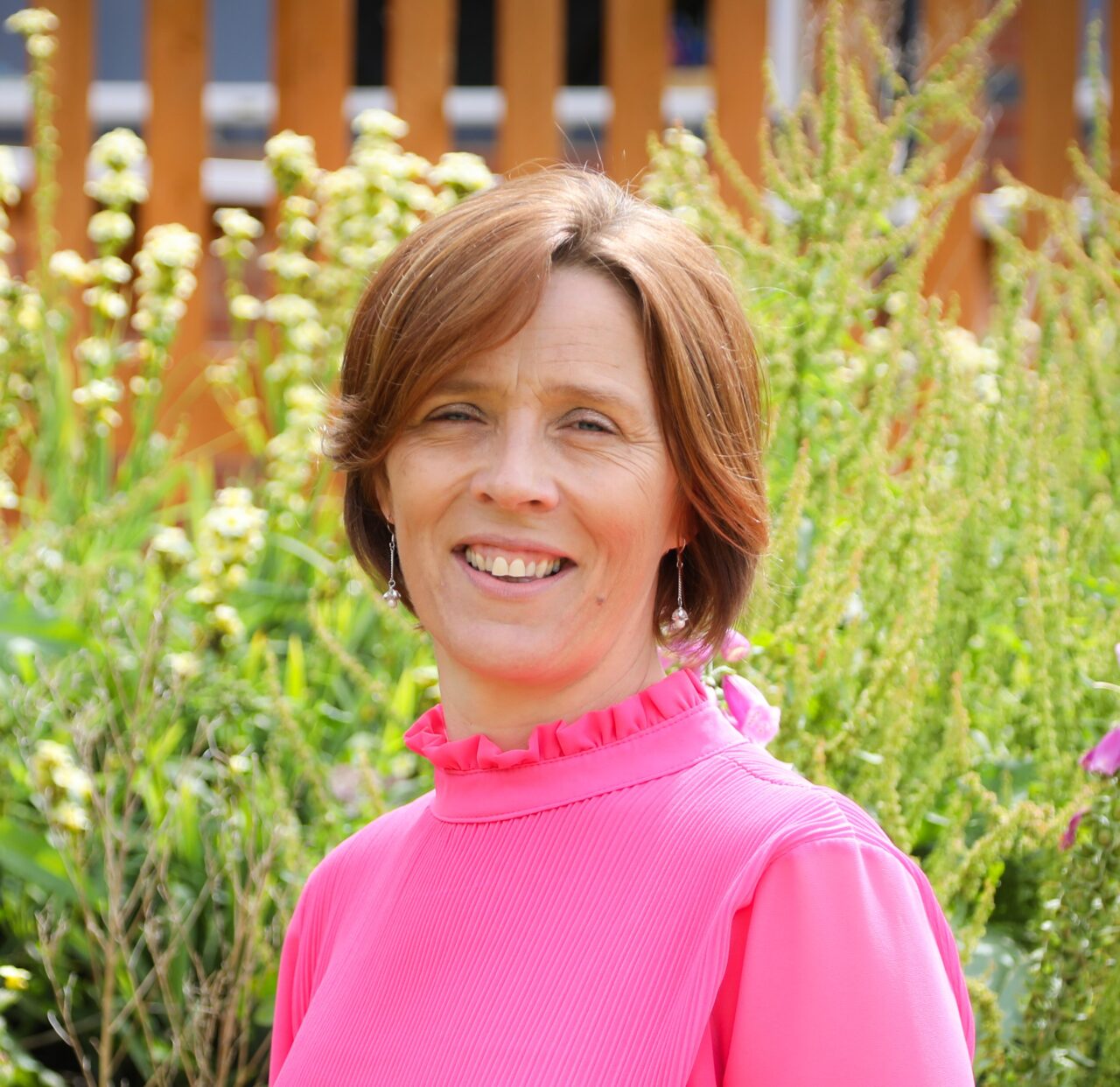
Ginny has been teaching longer than she hasn’t. She has been a Headteacher, Senior Manager and Class teacher, teaching all ages in the Primary age range. She is currently SENDCO of 4 Primary schools in Northamptonshire. She believes in her mantra #Followtheempathyroad and embodies this in everything she does.
She has spoken nationally at The National SEN Conference as well as NASEN Live. She collaborates with both Primary and Secondary SENDCOs by working alongside them to support them in what we all know can be a very demanding role.
She has had her book published ‘Independent Thinking on Being a SENDCO’ which can be found at Crown House Publishing.
You can find Ginny on Twitter @sendcogirl and at her website www.ginnybootman.com