

26th October 2023 • My Family Our Needs
In this interview, we introduce Dr Gina Gómez de la Cuesta who is a Clinical Psychologist and the Founder and Director of Play Included.
We asked Dr Gómez about the Brick-by-Brick® programme and how LEGO-based play can aid the development of neurodivergent children. She also told us about how parents can engage in imaginative play and engage with their children at home.
Would you mind telling me a little about your area of research and work on Play Included?
Back in 2004 I set up the first brick clubs in the UK in 2004 and studied the outcomes for children in my PhD. The research showed that they benefitted socially and their communication skills were boosted. From publishing some of my research papers and presenting at conferences, different professionals got in touch to ask how they could set up their own brick clubs and asked for teaching on how to do it. At first, I began training people informally but the demand was so high that I set up a not-for-profit organisation, Bricks for Autism, back in 2018. We partnered with the LEGO Foundation and they supported us to set up a bigger-scale social enterprise. We rebranded to Play Included in 2021 to be inclusive for all.
Tell me more about LEGO-based therapy and how this type of play promotes skills in autistic children.
LEGO therapy and our Brick by Brick program is about learning through play and by doing, rather than being taught skills in an abstract way. Children come to a Brick club which is non-stigmatising and described now as play rather than therapy. Kids are able to come along and play with other children and can work together to build their LEGO models, facilitated by an adult. They might have different roles like the engineer who gives out instructions and shows everyone the picture, or the supplier who passes out the bricks to the builder, who constructs the model. Everybody can see what everyone else is doing and can see the picture they’re working towards.
Naturally, there are some challenges when figuring out where the bricks go or how to describe the designs. Children are able to practice patience and wait for the other children whilst helping each other and all getting stuck in. There are lots of opportunities for using skills and building on skills children already have whilst having fun. They can socialise and chat whilst they’re building the model; perhaps it’s a Star Wars model and they want to chat about the latest film. It’s a nice conversation starter for kids who might feel uncertain in a group. They are also able to practice emotional regulation, responding to different feelings of pride and excitement, or frustration if they can’t figure something out. There are so many opportunities that come up naturally where they can use and develop skills.
How can play be adapted to accommodate the sensory needs of autistic children and how does it help neurodivergent children develop self-confidence?
Sensory wise, there’s a really satisfying way the bricks fit together. They’ve got beautiful colours and shapes so that might be a nice sensory experience for some children. Self-confidence wise, the great thing about LEGO building is that you can put the brick in the wrong place but it doesn’t matter because you can take it off and move it. It’s a nice way to practice making mistakes and that’s normal and it can be fixed. Seeing the finished product can also give the children a real sense of self-belief, that they have made something with friends. There’s something very physical and tangible that’s the result of their play and their efforts that can make them feel more confident.
What role does imaginative or pretend play in enhancing cognitive and problem-solving skills in neurodivergent children?
When a model is finished, there’s a huge scope of pretend play you can do. Where are they going? What are the people doing? What are the models doing? There’s scope for reenacting things children have seen on TV in their favourite programmes; I’ve seen that children love the accuracy of LEGO models.
There’s also more free-style imaginary play. With an aeroplane, what people are on it? Where is it going? Where are they travelling? There’s huge scope – it’s not just about building the LEGO model, it’s about what you do afterwards.
In Brick clubs, it’s not just about building a model that has instructions. There’s freestyle LEGO where you can design and create your own models from your own imagination. There’s a lot of scope for giving children a starting point or a theme and building something that can support imagination and pretend play.
We know that autistic people can be very creative and sometimes that’s underestimated. Sometimes some young children struggle with imagining something being in a different way, so there’s scaffolding if they do need that help, but also extra freedom for children that are really creative to extend their imagination.
What strategies can educators use to incorporate play-based learning into the classroom for neurodivergent children?
Of course, it depends on the young people and the staff and parents working with the children who know them best. In general, in Brick clubs, the position of the adult is a guide and facilitator who doesn’t give direct instructions. That’s the play approach to any learning. It’s about giving them choice and agency and enough guidance but enough freedom too. There’s a sweet spot in the middle that you would hover over as a professional. Children’s interests, what draws them in, what they like, and what they’re motivated by can all be used to support them in their play and learning.
How can parents create a supportive and sensory-friendly play environment at home for their children, and how can they foster imaginative and creative play?
Being aware of what your child is interested in, being respectful of what they want to do, but not steering activities too much is a great start. Support them to follow their passions and interests. If you think they like space, come up with ideas around that that may be different, creative, imaginary activities. Have a variety of toys and just follow your child’s lead. Don’t feel like there’s only one way to play. You have to be flexible with any activity. We’ve got some free-to-download activities for parents and one of our top tips is to go with the flow.
How can parents and caregivers actively engage in play with their neurodivergent children to maximize its benefits?
Be curious and show an interest in what your child is doing, making it a child-led activity where the parent is the observer. Quietly noticing without being too intrusive is a nice starting point. Building alongside the child and letting them take charge is a useful way to play with them. You might not be building the same model but you can notice what they’re building or vice versa. It’s all about building relationships and building connections in a way that’s supportive of the child. Make sure the child also has some downtime to play on their own without adults.
How can parents strike a balance between structured and unstructured play to meet their child’s developmental needs?
It’s a balance that depends on what else the child has been doing that day. Unstructured play is really valuable for children. It might help them regulate their emotions at the end of a long day or it may be self-soothing with nobody telling them what to do. On the other hand, giving them some structure might help them learn something they’ve not done before. Having a routine may be beneficial for neurodivergent children to build certainty. It’s a tough balance to strike but it’s about being aware of yourself as a parent and aware of your child – following your child’s lead is good.
Are there any resources, support groups or communities where parents can connect with other parents of neurodivergent children to share play ideas and experiences?
The LEGO Foundation and the LEGO Group have some nice bits on play and supporting your child’s wellbeing at home.
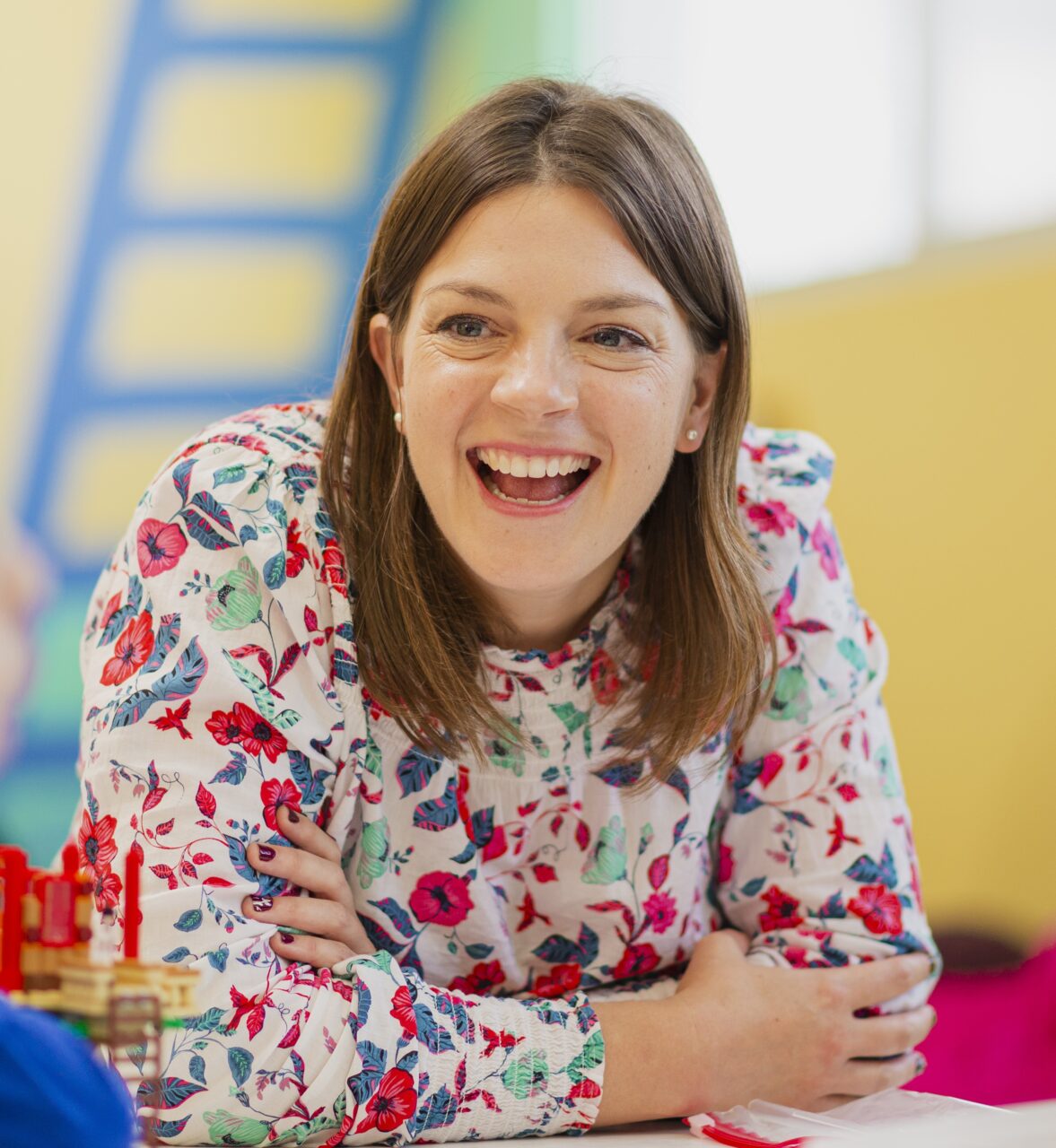
Gina is one of the UK’s leading experts on how collaborative play with LEGO bricks can support the social and emotional wellbeing of neurodivergent children. After founding Play Included (formerly Bricks for Autism) in 2018, Gina created the Brick-by-Brick programme (the only LEGO® Foundation approved collaborative play concept) based on her own PhD research on LEGO® based therapy at Cambridge University Autism Research Centre. As co-author of the LEGO based therapy manual, Gina is well-placed to discuss the importance of play for children’s learning and development.