

25th September 2023 • My Family Our Needs
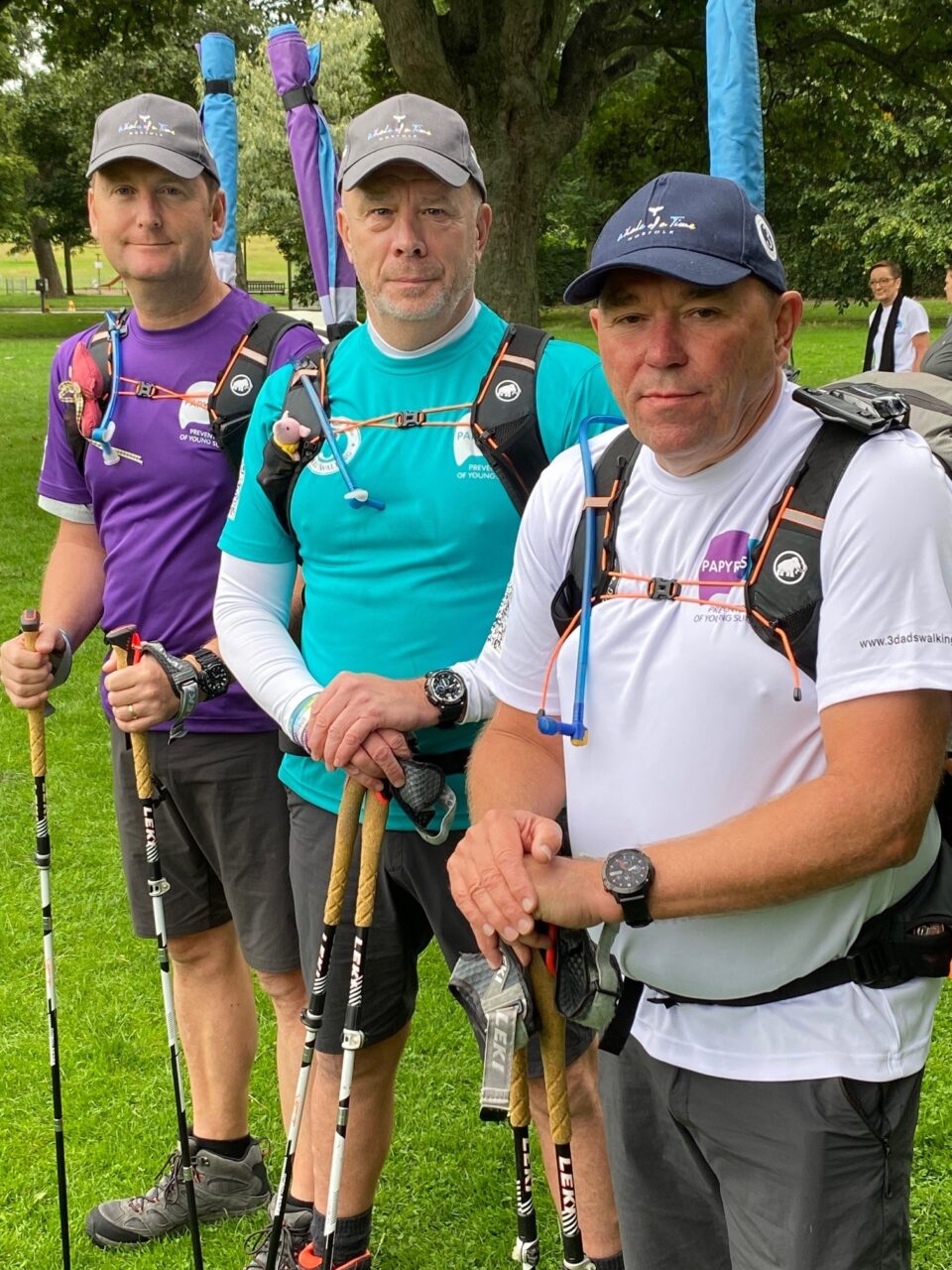
In this interview, we introduce Tim Owen who is one of the dads of 3 Dads Walking.
We chatted to Tim about his daughter Emily, her long road to an autism diagnosis and the intersections between neurodiversity and mental health.
Dads Supporting Dads
At the age of 19, just one day before lockdown in 2020, Tim’s daughter Emily died after trying to take her own life five days earlier. ‘Em decided to take her own life at the start of lockdown and we were thrown into a whole world of hurt and despair and didn’t know which way to go’, Tim told us.
‘When Mike and I started to speak a month after Em had died, three weeks after Beth had died, we agreed whatever time of day or night, we should call each other if we were feeling down or feeling low because we both had that connection that we’d both lost a teenage daughter to suicide’.
After being put in contact with each other by their remaining children, the 3 Dads came together and became a real source of support for one another.
‘I’m with two blokes that totally get what it’s like to lose a daughter’.
Emily and Autism
Unlike Mike and Andy’s daughters, Beth and Sophie, Tim’s daughter Emily was autistic. Recognised just last week in the UK Government’s Suicide Prevention Strategy 2023-2028, autistic people were highlighted as a higher-risk group for suicide.
‘Em was caring, compassionate, concerned for others, and hated injustice in the world. You know, everything was kind of black and white to her’.
Diagnosed with high-functioning autism when she was 15 years old, Tim explains how the diagnosis made a lot of Emily’s behaviours fit into place.
‘What it did do is make us realise as parents why Em was different and why she wasn’t neurotypical, why she behaved in certain ways, why she behaved perfectly at school, because she was masking everything, but needed space once she got home’.

The Long Road to a Diagnosis
However, the road to an autism diagnosis was not a smooth one for the family. After a distressing time for Emily between the ages of 13 and 15 following several suicide attempts Tim told us the family was ‘in crisis’.
‘Once we got that diagnosis, it made our approach as parents change but it also gave Em the support from external providers and school and she was able to get some GCSE’s’.
Emily was a keen artist having studied at art college for two years and gained a BTEC before taking on a fitness apprenticeship and working at the local pub in her village full-time.
‘I think in the couple of weeks before she died, she was behind the bar, a guy came in in a bit of a down place, a bit of a strange character. Em was the one out of all the bar staff that started talking to him and felt concerned about him. She was always really caring and hated injustice in the world’.
Tim told us that Emily also went to the gym regularly and loved to drive, often visiting the local beach with the family’s dog. Though, the week before lockdown, Tim explained, ‘I’m not saying life was perfect at all, but it was a lot better and she was going in the right direction when the pandemic came along and her coping mechanisms for dealing with her autism… Em’s world imploded. Everything she’d built up absolutely imploded’.
Late Diagnosis and Emily’s Mental Health
When asked if Emily’s long diagnosis process had affected her mental health, Tim agreed 100%.
Remembering her early years, Tim told us that Emily had emotional outbursts that were completely different to his other children. After realising her underdeveloped reading skills compared to her siblings, Emily received a private diagnosis of dyslexia.
However, both Emily’s school and doctor failed to spot the signs of autism in Emily.
Only when a friend in the family’s village suggested high-functioning autism did Tim see a new GP about Emily’s behaviour. It was not until they went private that they finally received the autism diagnosis when Emily was 15, an age, Tim thinks, was much too late.
‘She was a young lady. You’d just absolutely blown that girl’s world apart. If that diagnosis had come earlier and Em had had the knowledge and the tools to deal with her autism from a young age, we might not be in this situation’.
Tim stressed the need for early assessment. ‘If you label a 6-year-old with high-functioning autism, that’s not going to be a shock. They’re going to learn to live with it. I think getting that early assessment, and definitely an assessment before puberty, is massively important’.
Speaking about Emily’s previous suicidal behaviour, Tim told us, ‘When that comes at you as a parent with no training, no idea, you don’t know where to go. You’ve got no training yourself so you totally rely on the experts’.
‘Emily was under CAHMS. She was in crisis. They were saying her mental health’s bad. Her mental health was bad because they hadn’t assessed her for autism. Having autism is not mental health. Having autism is just a different way of thinking.
‘What she needs is a diagnosis and then we need to learn how to deal with the autism, simple as that. And who cares if she’s got a different way of thinking? We just need to adapt our life’.
‘Let’s Talk About It’
Speaking about PAPYRUS, the suicide prevention charity the 3 Dads have been raising money for on their walks, Tim said, ‘Imagine if we’d know about [PAPYRUS and HOPELINE247] as parents when Emily was alive. We could’ve explained that to Emily and could’ve said, look, if you’re ever feeling as bad as you did when you were younger, phone up HOPELINE and talk to some absolute experts and we could’ve accessed it’.
In light of the statistic that 1 in 5 people will have suicidal thoughts in their lifetime, Tim told us, ‘I think it’s so important that we’re open about suicide, and more importantly, suicide prevention. Young people and their parents need to know where to turn when somebody says “I’m having dark thoughts, I don’t want to be here, I’m thinking about suicide”.
‘Let’s talk about it, let’s not hide it away’.
When speaking about the Government’s Suicide Prevention Strategy and the identified higher risk of suicide for those with autism, Tim explained, ‘Only by saying there is a bigger risk there can we do anything about it, can we say, right, we need to be more careful or more protective of this particular group. We now know what the risk is, so let’s do something about it as a society’.
Reflecting on Emily’s life and the work of the 3 Dads since 2021, Tim told us, ‘My wife said to me, no one will remember Em in a year’s time. That kind of put something in my mind, and Em had also left us a note, a final note, that we found a few weeks later. There were two sentences in there – don’t be ashamed of what I’ve done and if other people can learn.
‘I took all those things, I told Mike about them all and we knew we needed to do something. And if Em’s legacy is a piece in the jigsaw to making it better for future generations, then that’s a big tick’.

Everything you need to know about PAPYRUS, including valuable resources, which can be downloaded, can be found on the charity’s website: papyrus-uk.org
For practical, confidential suicide prevention help and advice please contact PAPYRUS HOPELINE247 on 0800 068 4141, text 07860 039967 or email pat@papyrus-uk.org