
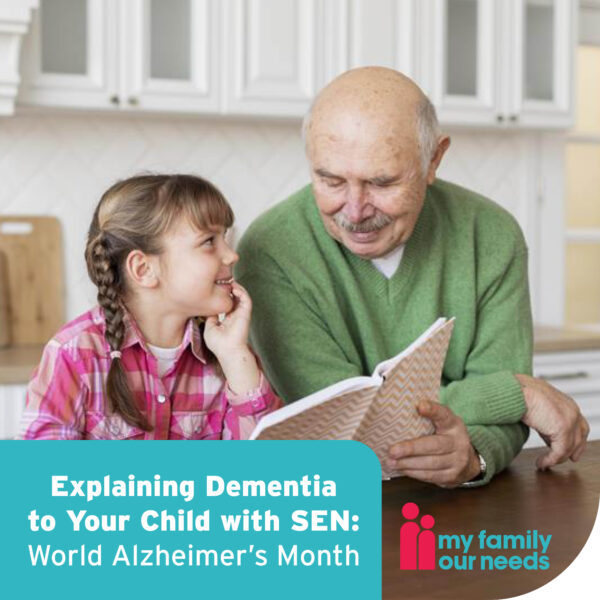
4th October 2023 • My Family Our Needs
Talking to your child with SEN about dementia can seem like a daunting task. However, there are plenty of resources and tips to help you.
When a member of your family has dementia, understanding their needs and behaviour becomes one of the biggest hurdles. Explaining their condition to children of any age can present quite a challenge, especially if the child has additional needs. In addition, if you are a parent living with young onset dementia – where symptoms develop before the age of 65 – discussing this with your child can be tricky. However, it’s important to remember that help is out there, and charities like Dementia UK and Alzheimer’s Research UK have some handy resources to help your children understand dementia, which includes Alzheimer’s disease.
Beginning the Conversation
Starting the conversation can be difficult. Whether you or a family member has received a new dementia diagnosis, or your child has started noticing changes in your or their behaviour, it’s best to create an open and safe environment in which to talk.
Dementia UK recommends five key tips for talking about dementia with children:
- ‘When you’re explaining what dementia is, be honest about what’s happening and how it may affect your family, but try not to overwhelm them.
- Make time to listen to their concerns. Give them the chance to open up and reassure them it’s okay to feel a range of emotions.
- Create a memory box – put in photos, cards and keepsakes to help them remember their loved one before they were diagnosed with dementia.
- Make new memories, too. Spend quality time walking, playing board games, or watching some family films together.
- Ask their teachers to look out for any behaviour changes, which could be a sign they’re not coping.’
Memory boxes may be especially useful for children with additional needs in order for them to visualise the person, tangibly connect with memories and focus on a specific activity. Decorating the box with different crafty supplies can also add a sensory, creative element to the task allowing the child to connect remembering with positive experience.
Activities Are Key
There are also plenty more activities for your child to get involved with to learn more about dementia. Alzheimer’s Research UK has a valuable collection of activities sorted by the age of your child to help them understand different elements of dementia and what their loved one may be going through.
Activities like these can be especially useful for SEN children where a task may be slightly easier to work through and break down the information into manageable chunks, rather than having large amounts offloaded onto them at once.
This can also help you process the changes you are experiencing together as a family. Not only will memory boxes be hugely beneficial for children, but compiling a collection of happy memories can also be healing for you as an adult who is going through a difficult time. You may also find that you’re able to discover things you didn’t know before about dementia. This may help you to understand your loved one and what they are going through a little more.
If you have been diagnosed with young onset dementia as a parent, Dementia UK also has plenty of helpful resources to help you explain this to your child, navigate your changing family dynamic and discuss what your future together might look like.
Helping a SEN Child Understand
In addition, it may be the case that your child may not feel they are able to independently reflect. It may be more difficult for them to process their feelings and give a label to exactly what is going on inside. Ensure you are always being honest with them, as well as being direct to a certain extent. Sometimes, it may be that children with additional needs follow direct instructions and facts rather than using metaphors or complicated language. Try to make it as straightforward but appropriate as possible so they are able to understand what is going on.
Reach out to a teacher, expert or charity like Dementia UK if you feel you need support explaining dementia to your child, or if they are struggling to adapt to the changes you or your loved one is exhibiting.
Using Stories to Explain
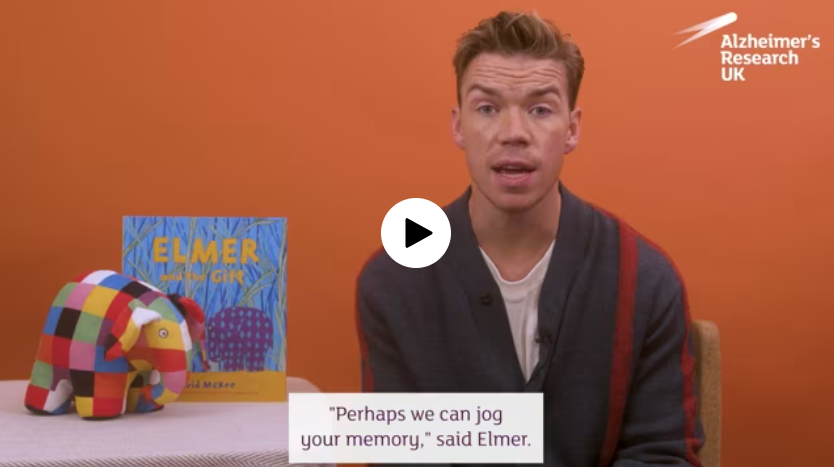
Stories can be a very useful way of breaking down complex things. Alzheimer’s Research UK have put together a video reading of Elmer and the Gift, a book which can aid your child in understanding Alzheimer’s disease a little better.
Your Child’s Independent Learning
If your child is slightly older or is finding it easier to understand dementia, there are plenty of resources they can seek themselves to work through in their own time. Both Dementia UK and Alzheimer’s Research UK have valuable resources for children to navigate independently. Your child may find that they want to get involved with raising awareness and funds for charities. Assisting your child with a fundraising campaign can also be a fantastic way to bring you closer as a family through these difficult times.
The Road Ahead
It is important to remember that whilst your loved one may be changing, they are still your loved one and it’s beneficial to remind your child of this. It’s also a good idea to remind your child that you will always be mummy or daddy if you have been diagnosed with young onset dementia.
If you have a child with additional needs, introducing new information and explaining changes slowly is a good idea so as not to overwhelm them with new situations and behaviours. Guide them slowly through these difficult times and take the time to be open and honest with them and encourage them to share any questions or feelings. Do be sure to reach out to charities if you find yourself needing extra help.
If you need advice or support on living with dementia, contact Dementia UK’s Admiral Nurse Dementia Helpline on 0800 888 6678 or email helpline@dementiauk.org
If you want to know more about dementia or are keen to get involved in research projects, contact the Dementia Research Infoline on 0300 111 5 111 or email infoline@alzheimersresearchuk.org.