
Wellbeing
Welcome to the wellbeing zone
Respite care – Sunny’s story
Revitalise is a national charity and the leading UK provider of breaks and holidays for disabled peo…
Respite care – Sunny’s story
Revitalise is a national charity and the leading UK provider of breaks and holidays for disabled people and carers across three purpose-built centres. It creates lasting experiences that stay with guests long after they return home and the charity campaigns for equal access to breaks and holidays.
Located on the edge of Epping Forest, Jubilee Lodge is just a stone’s throw away from the myriad attractions of London and the pretty towns and seaside resorts of the South East.
Inside the centre boasts a lively entertainment and bar area for those who enjoy socialising. Many of the indoor areas overlook a tranquil inner courtyard with an orchard and ornamental pond, where you can relax in serene surroundings.
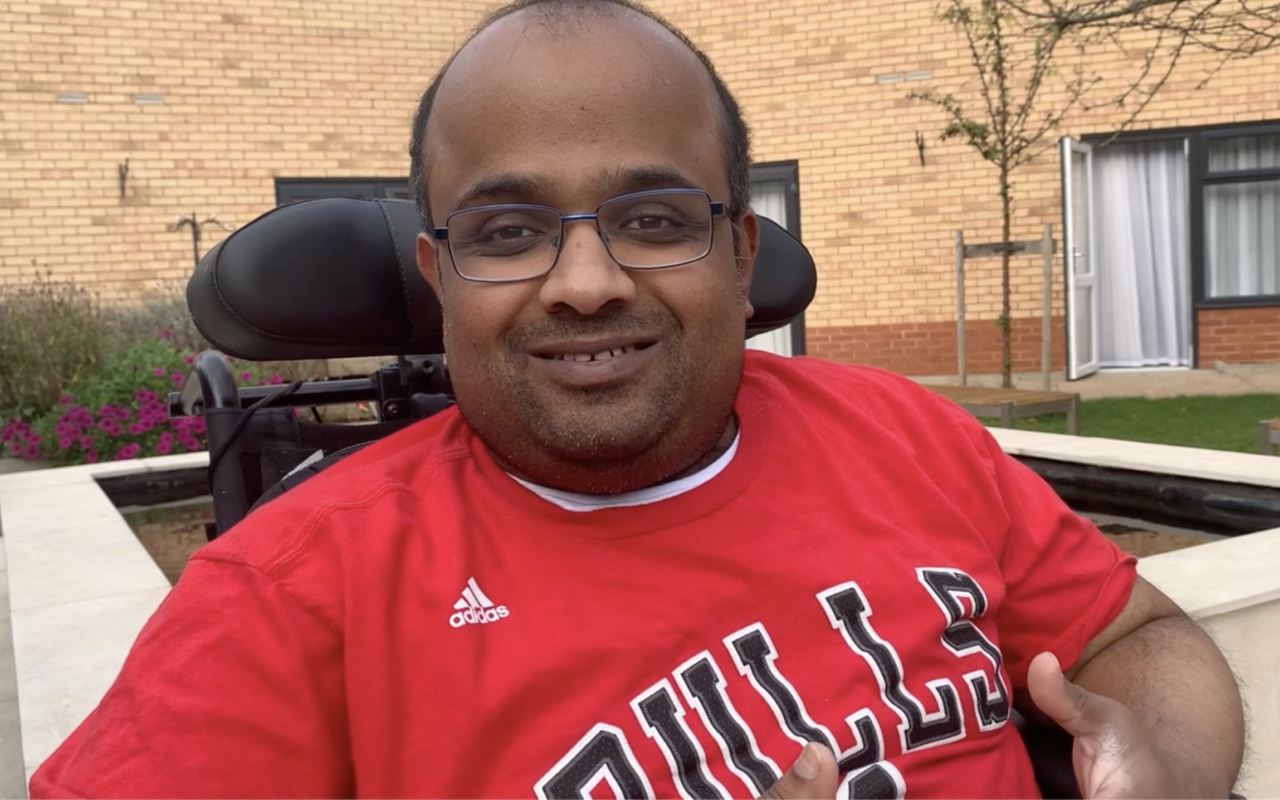
Sunny is from Stanmore and was born with Spina Bifida. He is also a regular guest at Jubilee Lodge. He lives with his mother who is his prime carer. In this video, Sunny explains why respite care is so important to him and his family.
To explore accessible breaks and respite care, visit the Revitalise website for more information.

A journey of acceptance: Charlotte Dowson
For any young person, and their parents/carers, receiving a diagnosis of ADHD can be a very difficul…
A journey of acceptance: Charlotte Dowson
For any young person, and their parents/carers, receiving a diagnosis of ADHD can be a very difficult and uncertain time. The ADHD Foundation introduced MFON to 20-year-old, Charlotte Dowson. Here, Charlotte reflects on her school days and her journey to adulthood as a young person diagnosed with ADHD.
It’s ok to be different
Every ADHD child will probably already know that growing up with ADHD is very hard and challenging. It can be very difficult to maintain and manage your life as someone who has grown up with ADHD.
I was diagnosed with ADHD when I was 10 years old, which was a tricky enough age as it is. It took a long time, as it does for the majority of people who are diagnosed with ADHD, to actually get an official diagnosis. Doctors and teachers might say to young girls, ‘Oh, they’re just chatty, they’re just confident.’ Or, sometimes, ‘Oh, they are just a naughty kid.’ I never wanted to be a naughty kid – that was just how I was labelled and treated as somebody who didn’t care. It was as if people thought I always lazy and/or couldn’t be bothered to listen. However, the reality was that I sat on my own struggling and begging for help, but nobody would listen. Thankfully once I got my diagnosis, I was able to realise that the struggles I was facing weren’t because I was a naughty kid, nor because I was lazy, it was because I was different and that was taking me quite a long time to adjust to and realise that it’s ok to be different. I actually prefer it. I think that if everyone was the same; this world would be very boring. I am very creative. I am an actor and a creator and performer – I love to perform; it just brings my soul so much joy. A lot of neurodiverse people are very creative, and I guess being academic just doesn’t really make sense to me. I can never get it; I can never get things to stick with me but being creative and acting everything just flows normally, and naturally. It feels like a natural part of my body to be creative.
ADHD is part of me
As I have grown up with ADHD, getting through school and exams was really hard. In particular, concentrating and sitting down reading an exam paper for two hours and 30 minutes has probably been one of the hardest things I’ve had to do, but I’ve got through it and I’m here still doing what I love. In fact, I’m thriving now even as someone who is 20 years old, and I still feel like a kid. I know that my ADHD does prohibit me from being able to do normal adult things, l such as financial independence and what might seem like simple things like being able to get my train on time; being able to afford to get my train because as someone with ADHD I don’t really think ahead and plan my bills, which is hard because, when you’re an adult, you kind of have to think ahead about a lot of things, (especially in the current crisis that we’re in at the minute but I’m getting ahead of myself!)
I know that being diagnosed with ADHD has been difficult for me to grasp, especially when I was younger. It took me a long time to accept and love the fact that I have ADHD.
I will never, ever say that it’s easy to anyone because it’s not – it’s really, really hard to love yourself. Yet, when you’re sat in the playground being called weird and feeling like you’re hiding this big secret, little 12-year-old Charlotte was really terrified of this big label that was put on me. However, over time, I realised that it means nothing and because I’ve always had it. It’s always been part of me, and it will always be part of me. ADHD makes me who I am and brings my personality out in the light.
New adventures
Last year, I started a one-year university course and fitting in with others has been difficult from the get-go. I won’t say it’s all bad, because it’s not. There is still this incredible amazing aspect to having ADHD, like the hyper concentration, being so creative and friendly to others and being able to see past certain obstacles that neurotypical people can’t. ADHD does have its challenges, such as continued focus, being able to pick up on other peoples’ emotions and feelings, finishing a task and being very time blind, which is a term that is often used at the ADHD Foundation.
I am planning on travelling this year. Seeing different countries and experiencing different cultures has always interested me, so I feel now is a great time to explore to see Europe and some parts of East Asia. I’m having a gap year mainly to help myself to grow as a person but also to learn to better manage my adult life and adult responsibilities with having ADHD. It’s a lot harder than everybody else says – you don’t just go to university and automatically everything is solved, because realistically you’re only there for a short time. What happens when you get out of the home and family environment is that you are just kind of popped out into the world and expected to know what to do but that’s not the case, especially not for me. Pre-planning ahead really scares me! I like to have a plan because if I don’t have a plan then I get stressed out and I have no idea what I’m doing. I’ve never liked that feeling and I’ve never liked surprises. You can ask any of my family! So, although university was hard, doing this gap year is definitely something that has been challenging already and I am only four months into it.
Understanding your mental health
Having ADHD and having mental health challenges, such as depression and anxiety (which is very common with ADHD) means everything is amplified. Everything is just a little bit harder to deal with, but it’s not all bad. Having ADHD means I find joy in even the smallest of things, like I’ll be obsessed with a simple picture or a song for the whole day. When I do this, it makes the day a lot more positive and happier. There are some days when I don’t want to get out of bed because I are not motivated and in my ADHD brain, I think, okay yeah cool, I will just stay in bed! Then there are other days when I’m really motivated because my ADHD is saying: you know what, we’re going to get up and do this and it outweighs the depression I might feel.
I guess the point about this is whilst it’s ok to have long-term plans and goals, having ADHD just means that in order to get there – you have to sometimes make short-term plans and goals, like daily and weekly tasks, to keep going and help you get there. But that’s ok, you are just going about things in a different way, but you can still get there.
For more information about ADHD, visit: Home – ADHD Foundation : ADHD Foundation
Art, Autism and mental health awareness
In what ways does art, crafting, and creativity help young people with autism? MFON columnist, Aoife…
Art, Autism and mental health awareness
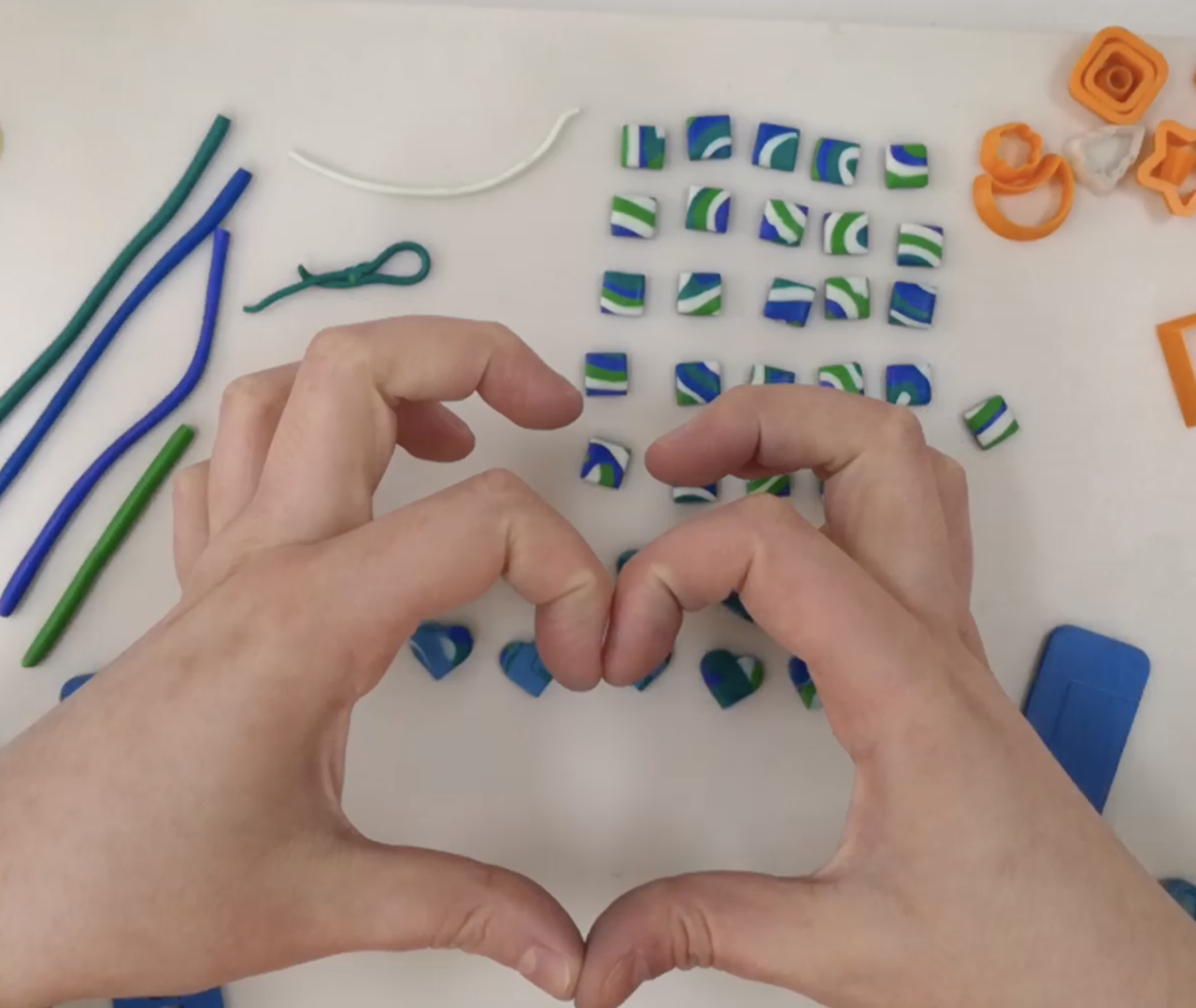
In what ways does art, crafting, and creativity help young people with autism? MFON columnist, Aoife Casson invites us into her space by sharing a video of her crafting at home and explains how crafting has become such an important outlet for her mental health.
Everyone’s interpretation of art and crafting is different. It could be a free-flowing practice or young people may choose to engage with an art therapist. According to The British Association of Art Therapy, ‘art therapy is a form of psychotherapy that uses art media as its primary mode of expression and communication.’
Art therapy offers children a safe form of emotional expression and communication that is unrestricted by language and communication difficulties. For children struggling with learning difficulties, art therapy offers a bridge between the child’s inner world and the outside world, enabling them to express their inner turmoil in the company of a safe and regulating adult. The therapist can then act as an “auxiliary cortex” (Diamond et al., 1963), empathetically helping the child to recognise, label and regulate emotions whilst, if appropriate, assisting them to understand and adjust to social and cultural expectations.
The British Association of Art Therapists offers a search service, if your child, or the young person you care for, wishes to seek art therapy with another adult. This route won’t be the right one for every young person, so it’s therefore important to determine the type of art and creativity that your child enjoys and explore the best approach on how to make it happen. For Aoife, crafting alone, (although sometimes with the friendly company of her dogs, Stanley, and Alfie), provides her with the calm and solace she needs to really express her creativity. Art comes in so many forms and parents/carers should explore all routes available to them.
For further information about art therapy and registered therapists, visit: http://www.baat.org
Reference: Diamond, S., Balvin, R. and Diamond, F. (1963) Inhibition and choice. New York: Harper & Row.

Time to play – New inclusive park opens in Bedford
Parents and carers across the country will know the challenges they face in trying to find an access…
Time to play – New inclusive park opens in Bedford
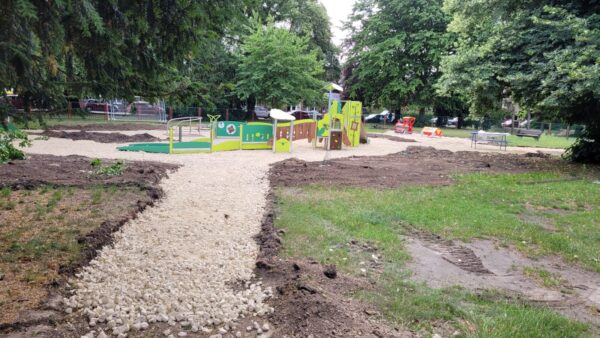
Parents and carers across the country will know the challenges they face in trying to find an accessible playground. The Parent Carer Forum (BCF), Bedford, secured significant funding this year to redevelop the existing park and to make it more accessible for young people and adults with SEND. MFON caught up with the BCF Chair, Kerri Rennie, to find out more about this exciting development, which opened this month.
The noise around needing a new park started before the COVID-19 pandemic. The Bedford Borough Parent Carer Forum has a large membership and a lot of people were telling us they had to leave Bedford to do simple everyday things, like go to the park. Parents and carers needed somewhere they could take a wheelchair or a walker, and to visit somewhere that felt welcoming. We knew there was a gap.
To help us find out exactly what the problems were for parents and carers, we spoke to people locally to find out some of the concerns from people living in the community. Some of the feedback included:
‘We would like to have a local park to be accessible and accessed by all our children – that would be fabulous. We have to travel to do this currently.’
‘We need more awareness in all our communal areas (parks, shops). People look at us like we don’t belong because my child screams and looks different to their own child. Education and awareness are needed everywhere.’

COVID-19 really brought it to the forefront. Just as restrictions were lifted, a parent phoned me and said how unwelcome she felt in this particular park. Her son has autism and she was being shouted at by other parents. It showed how important it is to have somewhere to go where everyone is welcome and a place that doesn’t feel sterile. This felt to me like something everyone else would expect in the local community.
Bringing ideas to life
To begin with, we had new signage printed on big daisies in several parks to raise awareness of people with SEND.
However, families wanted something on their doorstep that was inclusive where they could go after school and engage with other families. The feedback from members of the forum was that they wanted something accessible; they wanted their children to be able to use the trampoline, the pathways, the picnic areas; and they wanted it to be somewhere siblings could also visit so they could use the whole park as a family. I’m a parent of children with learning disabilities, so I really understood it.
The new park has a number of features: there’s a wheelchair-accessible trampoline and roundabout, a sensory garden with barefoot pathways, and places for people to sit. Our aim was to get people outside in a meaningful way, where it feels safe and pleasant.
Growing the awareness
There are a couple of other accessible parks around the country – one in London and one in the north of England. Luckily, the idea has caught on and some of the other local parks are getting involved, so I think that’s a great step forward. A big problem we hear about is bullying. I think if we can ensure children see other children who have disabilities from a young age, it will help to prevent bullying.
We have a few special schools in Kempston but, as these requirements become more known and talked about, I’m hoping more thought will be put into planning when people are considering parks and green spaces.
Because the equipment is bigger in the new park to make it accessible, I am aware it’s probably going to look slightly different. However, it’s been so well thought out and is enhanced with communication boards; I think it will be a great asset to Bedford. It’s so important that people are aware of the park. If it’s created by the community, then it will be looked after by the community and will be utilised.
Far-reaching support
The project is one of a few play area improvements as part of Bedford Borough Council’s £500,000 upgrade taking place this summer. Improvements have already been completed at Fairhill playground by Sainsbury’s and some are ongoing at Balliol Road. There are also plans for improvements at Jubilee Park.
Our inclusive and accessible outdoor play area in Russell Park will open this month (July 2022). We were granted £100,000 for it. It didn’t take long for the money to be eaten up – there was a lot to think about. There was the flooring, weatherproofing and access to consider. We did have some wheelchair-friendly swings but they were underlaid by grass so, for six months of the year, they were not always accessible.
To co-produce the park with everyone has been a real experience. The icing on the cake will be when it’s up and running. When it’s a sunny day and there are families playing in the park, it will show it to be a good asset.
If creating this park highlights the need for such facilities in other areas, then it shows the work we can do as a collective. We’ve got 1,300 members in Bedford Borough Council on the Parent Carer Forum from a wide, diverse community. I’m hoping the new park will help to improve parents’ and carers’ wellbeing.
Open to all
The park is not only for children who require accessibility. It will also benefit neurotypical children – they can nip to the park on their way home from school, for example.
The sensory garden will also be open to all, including adults. The park isn’t only for children and will be supporting around 6,000+ SEND families in Bedford.
It’s important to add that the park is for people of all ages – some older children might be seen as much older but, due to their cognitive ability, are in fact a lot younger. Some of the feedback we had was that people felt uncomfortable going into the park when you have a child who is 6ft but actually aged 12 in cognitive ability.
Because the park is so public, it will help to raise awareness of the sector. This project was born out of working out what we can do; it’s now grown and it’s become such a nice story. It’s a nice way of showing people how important something like this is. When you think of the impact this park will have – the health and wellbeing achieved by getting outside, the access, and it being open to all the family – it shows we’ve thought of everyone.
Advice for parents/carers
I would encourage everyone to use their Parent Carer Forum to raise local community concerns and have conversations with the local authority, etc. – and to keep having those conversations. Look for opportunities and ways to improve your community, and work together. I think the biggest thing for us is the working relationships between us – realising there are restraints and you have to work together. You can also raise it with your local council – all councils have a feedback element and you can suggest what you would like to see as a local resident.
It’s important, seeing your child play in the sandpit, knowing they can access or jump on a trampoline, or just having your whole family together so they can have a picnic in a nice area – that doesn’t cost anything and allows you to get out of the house and just be. Most families just want to enjoy what’s on their doorstep. We are constantly working to improve services in Bedford.
We are also currently doing a ‘help the healthy’ carer programme, which is run by Exeter University.

Those of us in the forum are constantly pushing to make sure changes are made and that the best outcomes are achieved for all. The sensory garden, the park and the #SummerOfSEND are all key and we also have an autumn schools project that we are piloting in Bedford. We have lots of opportunities to ensure we hear different voices from parents and carers in Bedford to feed into these projects as well.
What I would also say to other parents and carers is to keep talking. If it’s a concern to you, then speak out because you might not be the only one for whom it’s a frustration.
The park is now open! What’s been the reaction for parents/carers?
‘It is excellent news and very inclusive for all. Thank you!’
‘Genuinely so excited about this. I have two wheelchair users. The idea they can go to a park and play together is amazing – something I never imagined they would do. Thank you.’
‘So many local families will benefit in many ways! Let’s make memories.’
‘It’s been needed for years – about time too.’
#SummerOfSEND
Following on from the success of last year’s #SummerOfSEND, we are delighted it has returned this summer and it will include the Inclusive Island at Bedford River Festival.
We are constantly updating these pages with new and exciting events, so please do keep coming back to check out what’s new and also follow us on social media for the latest updates using the hashtag #SummerOfSEND. Along with the amazing children and young people, we have made a short video about this year’s #SummerOfSEND.

Kerri Rennie is Chair of the Bedford Parent Carer Forum. She is mum to Reece and Finlay. Reece has ADHD, moderate learning difficulties and severe dyslexia, which has meant he has received an Education, Health and Care Plan. Finlay has a diagnosis of dyslexia. Both of them have attended mainstream schools.
Kerri joined the Bedford Borough Parent Carer Forum as she wanted to inform and empower other parent carers of children with SEND, as well as to take the voice of the parent carers to the people who make decisions about our children’s lives.
In 2019, Kerri took over the role of Chair and hopes to keep challenging the system so that all of our children and young people achieve their goals and raise awareness of all needs to bring true inclusion.

Autism and mental health
MFON speaks to Child and Adolescent Consultant Psychiatrist at Active Care Group (ACG), Dr Nishchint…
Autism and mental health

MFON speaks to Child and Adolescent Consultant Psychiatrist at Active Care Group (ACG), Dr Nishchint Warikoo, about mental ill health in autistic children.
MFON: How has the pandemic heightened mental health challenges for autistic young people?
Dr Nishchint Warikoo: We could almost compare the pandemic to a war-like situation. There was a great fear for life and the pandemic had a major impact on public sector services and customer support networks. People having to isolate meant the social support networks also weakened. I think it had a major impact on young people with autism because they like routine – things to be planned well in advance – to help them manage things better.
Due to the pandemic, children were suddenly not in school. If children had sensory needs or needed speech and language support, these needs would likely be met in school. That support disappeared almost overnight, so that was a major change for young people with autism.
The fear surrounding the pandemic created major anxiety in young people, particularly those with autism. Add to that any anxiety from parents transferring to the children and you had all-round anxiety, a lack of professional support and a lack of structure to the day. Not only did it increase the anxiety or low mood a child might already have had, but it also triggered anxiety in those who weren’t already affected. During the pandemic, I worked in both England, with ACG, and Sydney, Australia. The situation in the two countries was similar: we saw an increase in inpatient admissions, young people who had no problems beforehand presenting with severe anxiety or OCD, and young people struggling much, much more than previously.
MFON: What are some of the signs and symptoms parents and carers can be aware of to prevent reaching crisis point and how can they manage that?
NW: It’s a very good question and there are multiple ways of answering it. We need to remember that parents are experts in their own children, so a key thing parents can do is to compare their child’s behaviour – their interactions in social situations or at home – with how the young person was behaving before. So, if they see a major change in the presentation – if they see the young person spending too much time on their own, not enjoying things they used to enjoy, not participating in things they used to do, not eating, reducing their self-care and, in some extreme cases, becoming aggressive verbally or physically, or self-harming – these changes would be an indication that something is going on and parents need to be watchful of their child and consult their GP.
In terms of managing it, try to get as much structure as possible into the week. If there’s a lockdown and children cannot go to school, build a plan with the child, which the child leads on. All the other family members are part of the team.
It’s important to emphasise that young people with autism have difficulty in blocking out different types of sensations and may have sensory sensitivities. Let’s say we’re at a party and there’s lots of noise and lights but there’s someone next to us who we want to talk to. We can almost black out everything else to listen to each other but the person who has autism can’t do that. They’re having to process visual, auditory and sensory stimulation all at the same time, so when we’re communicating with young people with autism it’s better to reduce the sensory stimulations, particularly if they have sensory sensitivities. Find a quiet room, if possible close the door, don’t make it an issue if they are unable to look you in the eye (sometimes parents get upset about this and take it personally), speak in very clear, short sentences, give them chance to ask questions and then give them time to process the information. You need to be patient with them.
MFON: Can you give an idea of therapies and treatments for mental health for people on the autistic spectrum?
NW: Early diagnosis of autism is key to any support being provided to the young person. Then, accordingly, support can be put in place in the form of individual therapy and family therapy, enabling the young person to learn how to understand more social cues and how to use them to communicate with other people. Research has found that the earlier this is done, the better the outcome – support should ideally start in the early years of the child’s development. If that’s not put in place, struggling in interpersonal relationships can lead to low self-esteem, which over time can lead to other comorbidities like anxiety and depression.
The National Autistic Society has lots of courses and information leaflets that parents and carers can access. Then, locally, we have GPs and CAMHS teams, which is where parents can get support in the form of assessment and therapies. The useful links and groups are below:
- National Autistic Society: www.autism.org.uk
- Ambitious about Autism (for autistic children and young people, their parents and carers): www.ambitiousaboutautism.org.uk
- Healthtalk (to listen to other people’s experiences of autism): www.healthtalk.org
You can also search for local groups using:
- The National Autistic Society services directory.
- Autism support groups on the NHS website.
I’ve had one or two young people admitted to my ICU ward in Huntington Hospital with different mental health disorders, but we found that autism spectrum disorder was the key reason why they had presented to the hospital. Once we put support, tailored to their specific need, in place, it was easier to discharge them back into the community.
MFON: What is the best approach if a parent or carer needs to speak to their child’s school?
NW: Schools have various provisions: SENCo, or the special educational needs co-ordinator; psychologists, who will do a functional assessment on the young person, helping to guide them to further assessment for autism; links with local children’s services; and, of course, the Education, Health and Care Plan (EHCP). If the child needs admission to an inpatient unit, there is the Care, Education and Treatment Review (CETR), which is where the school, health services and children’s services come together to provide a co-ordinated and comprehensive support package.
MFON: And what about the provision for those admitted to hospital?
NW: For children with autism, currently the waiting lists are quite high in the community – there is up to two years between referral to CAMHS and a child being diagnosed. If they need inpatient admission, they require a specialist bed because of the sensory issues. Nationally, that limits the availability of beds for young people with autism.
MFON: Please tell us more about your role in supporting autistic young people who have mental ill health.
NW: In the Active Care Group (ACG), for which I am a clinical lead for mental health, we look to empower the young person. We look at their needs and understand the difficulties they are facing, but also at the same time look at the positives they have in their life and their strengths. To do that, we have really good specialists and a team to work on these assessments, comprising psychiatrists, specialist nurses, psychologists, family therapists and occupational therapists. The ACG provides a complete, holistic pathway of care – a multidisciplinary approach. If a person has depression, that diagnosis does not define the person – we look to understand what has led to the depression and what is keeping it going. From that we can create a holistic programme for the young person. Not only that but we also have very good co-ordinated care plans with the teams in the community – the educational services and children’s services – so discharge from the hospital can be done in the best possible way.
Dr Nishchint Warikoo
Dr Warikoo is a Child and Adolescent Consultant Psychiatrist who has over 10 years’ experience in the field. Qualifying in India, Dr Warikoo worked for the Indian navy as a GP for five years before training at Southampton to qualify for membership of the Royal College of Psychiatrists. Dr Warikoo has extensive experience working with high-risk and complex patient cases, and in a clinical and forensic setting, using therapies including CBT, CAT and family therapy. Additionally, Dr Warikoo is a qualified educational supervisor and trainer with an MBA in health and healthcare administration. He was appointed Clinical Lead for mental health at ACG earlier this year.

Supporting your mental health and wellbeing
In this video the Council for Disabled Children look at ways of supporting your mental health and we…
Supporting your mental health and wellbeing

In this video the Council for Disabled Children look at ways of supporting your mental health and wellbeing during times of transition.
It covers:
- What mental health and wellbeing are
- Understanding how you are feeling
- How you can get help from other people in your life
- What tools can help you do it
Council for Disabled Children is the umbrella body for the disabled children’s sector bringing together professionals, practitioners and policy-makers. Find out more here

Physical activity and the benefits of the great outdoors
Physical activity can help you sleep better, feel happier and manage the stress of everyday life. In…
Physical activity and the benefits of the great outdoors

Physical activity can help you sleep better, feel happier and manage the stress of everyday life. In this Q&A, Sally Wilcock from the Strawberry Line Cycle Project looks at the benefits of physical activity on mental health, and what activities are available.
Q. Now that restrictions on travel and activities have loosened, what activities are available for people with learning disabilities if they want to get out and about this spring?
It is great that people can get out and about more. Although we can’t do everything we used to do, there is still a good variety we can do and much of that is outdoors. Getting outdoors is something that we, as a project, love to encourage people to do.
Outdoor activities include walking, cycling, picnics, yoga, outdoor swimming (although please only do that with a qualified outdoor swim coach; there are plenty around and we could recommend a great one in North Somerset), outdoor pursuits such as archery, golf, lawn bowls, tennis … the list is endless.
Sometimes, it is hard to see past the fact the cinema is still shut or that we are unable to go ten pin bowling, but there is a great number of outdoor activities. For example, planting seeds and seeing the results grow or taking a countryside walk with a camera to get some wildlife photos – both can be hugely rewarding. What’s more, these activities are accessible to all, regardless of any additional needs. A further benefit of outdoor activities is they tend to be more inclusive, allowing people with additional needs to participate along with friends and family.
Q. What benefits does physical activity have on mental health?
The benefits of outdoor exercise on mental health are well documented for reducing stress and anxiety and creating feelings of calm. It is believed the natural light, fresh air and endless feeling of open space all contribute to these benefits. Couple this with the endorphins (the feel-good chemical released by our brains during physical exercise) and people are set to feel the rewards.
There are, of course, also the benefits of who you choose – or don’t choose – to do the exercise with. For some people, that may be time on their own to unwind and enjoy the peace. For others, this could be the opportunity to participate in exercise with friends and family, or the chance to have fun with people you love away from the routine elements of life.
Q. What other benefits can participating in physical activity have?
The benefits of physical activities have long been known and documented, such as having a healthy weight and an improved cardiovascular system. However, there is more to this – more that can empower individuals.
Participating in a range of physical activities allows us to use a variety of muscles and motor skills, in turn allowing us to learn further skills for life. For example, playing lawn bowls and gripping a ball will strengthen the muscles and motor skills of an individual’s hand. This, in turn, could allow for better fine motor skills when using cutlery.
Another good example of how we benefit relates to ageing. As we age, muscle throughout the body will deteriorate but physical exercise, such as team sports or strength training, can counteract that, allowing us to maintain our skills and independence into our older years.
Q. Tell us about yourself and Strawberry Line.
Our project, the Strawberry Line Cafe and Cycle Project, began life 10 years ago when we opened a small cafe in what was a derelict train station waiting room. The project was established as a not-for-profit organisation that offers paid employment to people with learning disabilities. Over the years, numerous young people with learning disabilities have either trained with us or been employed by the project.
Following on from the success of the cafe, the team saw the opportunity to expand and that was when the cycle hire was opened. The hire is again an inclusive employer, offering both paid and training opportunities to people with learning disabilities.
As an inclusive employer offering valued community facilities, we also wanted to ensure we were inclusive for all members of the community. This is why we have a fantastic range of adaptive bikes in addition to our regular bikes.
Our project is based at the start of a 10-mile off-road trail, enjoyed by walkers, joggers and cyclists. We have a range of bikes available and enjoy enabling people with a range of additional needs to use our bikes. Getting out in the fresh air is such a simple pleasure with wide-ranging benefits. Making this accessible for more people is fantastic.
Boundaries: the boldest form of self-care
MFON columnist, Aoife Casson, shares her open and honest accounts of living with Asperger’s, Dysle…
Boundaries: the boldest form of self-care
MFON columnist, Aoife Casson, shares her open and honest accounts of living with Asperger’s, Dyslexia, Dyspraxia and Dysgraphia, talks boundaries and the importance of setting them for self-care.
Why boundaries are important
Boundaries are the invisible barriers we put up to protect ourselves from the outside world. They’re the rules that say, “this is what I’m comfortable with and this is the line you can’t cross”. Most of us set boundaries when we enter a new situation, such as starting a new job, going on a first date or moving in with flatmates. However, it’s never too late to set a boundary, especially if you’re still working out what they look like to you. The important thing is to remember that you’re not being selfish by setting them. This is a form of self-care. And everyone deserves to feel safe and comfortable in their lives.
Boundaries are important for several reasons. They help your friends and family know how best to support you, and where you stand on a variety of things including socialising, physical contact, doing favours and more. They also help you define what you are and aren’t ok with and give you the power to say no. At first, boundaries may sound like a negative thing, like you’re shutting yourself off from people. In fact, the opposite is true. Clear boundaries are the foundation of any positive relationship or interaction, and they work both ways! By being clear about your boundaries, you’re inviting the other person to open up about theirs.
Autism and boundary setting
Setting boundaries is a vital part of self-care, especially when you have extra support needs. As an Asperger’s person with multiple learning difficulties, setting boundaries means I don’t have to explain myself to every person I meet. My boundaries are non-negotiable, and people need to respect that, regardless of whether or not they understand them. As a disabled person, your boundaries may be different from a neurotypical or able-bodied individual and that’s ok. There is no right or wrong way to look after yourself. Self-care can look like many things. On one day, it could be having a lie-in and watching your favourite film. On another day, it could be saying no to an invitation or a hug from a family member because you’re not feeling up to it.
If you’re finding it difficult setting boundaries, or you’re feeling guilty for saying no, try thinking of a close friend or loved one. You care about them and want them to feel safe, happy and respected, right? And if they told you that something you did made them feel unsafe, unhappy or disrespected, you’d stop right away, wouldn’t you? Your friend’s boundaries are just as important as the ones you set for yourself. You deserve to feel just as safe, happy and respected as they do.
Boundaries designed around you
Take some time to decide what boundaries are important in your life. What do you need to feel truly yourself? What’s happening in your life right now that’s preventing you from feeling that? Now think about how you can implement them. It could be simply removing yourself from a situation, or a polite but firm “no, I don’t feel comfortable doing that”. Try practising saying no in the mirror or with a friend. Don’t explain yourself or make up reasons for the boundary, just let them know that it’s there. This will make you feel more confident when you do it in a real situation. And remember, if people start feeling defensive or uncomfortable, that’s on them, not you. You deserve to feel comfortable just like everyone else.
Whatever you do, remember to congratulate yourself for setting them. This isn’t easy, and practice makes perfect, but ‘future you’ will be grateful!
Visit the National Autistic Society for more information about how to get involved with the awareness week this week and for links to helpful resources.

Can I learn to drive if I have a disability?
Having a disability doesn’t necessarily mean that you can’t drive. Motability share their tips o…
Can I learn to drive if I have a disability?

Having a disability doesn’t necessarily mean that you can’t drive – there are various modifications that can be designed to help make your driving, or travelling experience as comfortable as possible, depending on your needs.
If you are disabled and want to learn how to drive, you might find this article useful.
Get a provisional licence
First off, you should apply for your provisional driving licence. The earliest you can submit an application is three months prior to your sixteenth birthday. You can get the form needed to do this — called a D1 — from any large Post Office, or you can download it online from the government’s website.
Once you have sent this off, the Driver and Vehicle Licensing Agency (DVLA) will often send back to you a ‘medical-in-confidence’ form which will ask for further information about your disability. It is also likely that the DVLA will ask for your permission to contact your doctor, but this is totally normal! After this, they will review your application and will usually issue your provisional license. In some circumstances, the DVLA might ask you to see its own specialist or another doctor close to you to make sure your licence is suitable.
Take a theory test
Anybody learning to drive needs to take a theory test. This is a test you do that doesn’t involve sitting in the car at all, but instead shows you know the theoretical rules of driving. You may want to take this assessment before beginning practical lessons, as there is a possibility, with some cases, that you find it isn’t possible to drive once you begin lessons. If you suffer from deafness or hearing problems, you can get a DVD about learning the Highway Code with sign language. There are similar products available to assist with the theory test, too.
Find a driving instructor
You may find it useful to find specialist driving instructor
Once the theory test is out of the way, it is time to find a driving instructor. While your local area may be full of instructors, if you’re learning to drive with a disability, you may find it beneficial to seek out the extra knowledge that a specialist tutor brings to the table. Driving Mobility (previously known as Forum of Mobility Centres) is a good place to start as Driving Assessors, at most Centres, will be able to assess your needs and recommend solutions for you. This involves them assessing your needs first, and then teaching you to drive, sometimes in specially adapted vehicles. They can also help you with the theory and hazard perception tests.
Most students need around 40 hours of driving tuition to be able to pass their test, so you will spend a lot of time with your tutor — this is why it is important to pick an instructor you feel you will get along with!
Take the test
In 2017, the government implemented changes to the way that driving tests are carried out in the UK. Nowadays, actual driving time is around 20 minutes, and some traditional manoeuvres – for instance, reversing around a corner – will be replaced by more ‘real-world’ trials, such as reversing into a parking bay.
Help with the cost of driving lessons
If you are an existing Motability Scheme customer, some grant funding may be available from Motability, the charity, to help those learning to drive with a disability. You can find out more about Motability grants here.
Learning to drive is an important milestone in our lives. Think about your requirements, study and practice hard, and you could be on your way to driving in no time!
What if I can’t drive?
Did you know that the you don’t have to drive in order to lease a car through the Motability Scheme? Lots of our customers don’t drive. That’s why the insurance with your lease is for up to three named drivers, so your car could be driven by a family member, friend or carer.
Am I eligible for the Scheme?
The Motability Scheme offers an all-inclusive package that allows anyone in receipt of higher rate mobility allowances (such as the Enhanced Rate of the Mobility Component of Personal Independence Payment or the Higher Rate Mobility Component of Disability Living Allowance) to use their mobility allowance to lease a car, scooter, powered wheelchair or Wheelchair Accessible Vehicle. The Scheme provides flexible and hassle-free access to a brand new, reliable vehicle of your choice – giving you greater freedom, everyday.
Find out if you’re eligible to join the Scheme
If you are not a Motability Scheme customer and are interested in finding out more about the Scheme, you can request an information pack for more information. Request Scheme information
Originally posted by Motability on January 2020 on https://news.motability.co.uk/everyday-tips/can-i-learn-to-drive-if-i-have-a-disability/

Could the Motability Scheme help your family?
The Motability Scheme enables disabled people to use their mobility allowance to lease a new car, sc…
Could the Motability Scheme help your family?
The Motability Scheme enables disabled people to use their mobility allowance to lease a new car, scooter or powered wheelchair.
Some cars are available at less or no more than the cost of the weekly allowance. However, more expensive cars require an additional payment (known as an Advance Payment) to cover the cost of the lease.
There are over 2,000 cars to choose from, including hundreds of automatics, from all the major manufacturers. The Scheme has a wide range of WAVs and adaptations.
The lease includes insurance, servicing, repairs and breakdown assistance at no extra cost. Family members and carers can drive the car on behalf of the disabled person, as a result, non-drivers can join the Motability Scheme too.
The Motability Scheme is open to those who receive:
- Higher Rate Mobility Component of Disability Living Allowance (DLA)
- Enhanced Rate Mobility Component of Personal Independence Payment (PIP)
- War Pensioners’ Mobility Supplement (WPMS) or
- Enhanced Rate Mobility Component of Armed Forces Independence Payment (AFIP)
To lease a car, scooter or powered wheelchair, you must have a minimum of 12 months of your award remaining.
As a national charity, Motability may be able to provide charitable grants to disabled people who would otherwise be unable to afford the vehicle, adaptations or driving lessons they need. Visit our website motability.org.uk for more information on charitable grants.
Over 600,000 disabled people and their families are benefiting from the freedom and independence provided through the Motability Scheme.

How Motability has helped Elisabeth
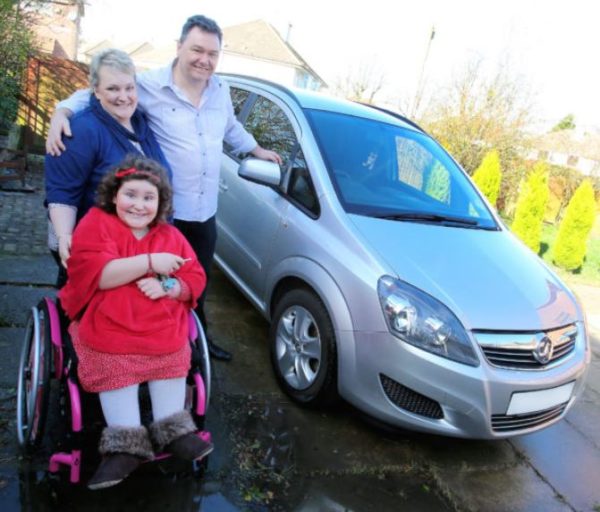
Meet fourteen-year-old Elisabeth and her mum Sam. Elisabeth has spina bifida and hydrocephalus – conditions that affect her nervous system and mobility. She cannot walk or stand independently and uses a wheelchair full time.
Sam explains, ‘We knew that Elisabeth was going to be born disabled but nothing prepared us for the impact it would have on family life. As she got older, we struggled to lift her into the car, and there wasn’t enough space for the wheelchair and the whole family to travel together. What we needed was a car with ramped access so that Elisabeth could travel in her wheelchair, but that was also big enough for the whole family.’
Sam approached Motability, who assessed the family’s needs, and gave them a grant towards a suitable Wheelchair Accessible Vehicle (WAV). Allied Mobility is a Glasgow-based conversion company. They took a wheelchair accessible vehicle to the family’s home to demonstrate how it might help them. The rest, as they say, is history.
Increased Independence
‘Everyone at Allied Vehicles and Motability was so helpful,’ explains Sam. ‘Thanks to the new car we are mobile! Everyday tasks are so easy and Elisabeth loves to travel in her wheelchair – she can even push herself partway up the ramp.
‘After we got the car, we went on our first family camping trip. We managed to pack up the tent, Elisabeth’s wheelchair and buggy, six people and all of the camping gear for the weekend and spend some quality time together – something we couldn’t have done without the new car.’
Allied Mobility’s Managing Director, Paul Nelson, commented:
‘It’s wonderful to see just how much difference the right vehicle can make to someone with reduced mobility.
‘At Allied Mobility we understand that every customer has different needs. That’s why we’ve developed a wide range of Wheelchair Accessible Vehicles. Our range includes the Peugeot Expert Independence, which is specifically aimed at families and small groups.
‘It really is about increased independence for everyone. I’m really delighted that Elisabeth and her family are now able to get out and about when it suits them and even go on family holidays together with their own WAV.’

Motability is a Registered Charity in England and Wales (number 299745). They are authorised and regulated by the Financial Conduct Authority (Reference number 736309). Motability Operations Limited is authorised and regulated by the Financial Conduct Authority (Reference number 735390).
If you would like to find out more about Motability and how we can help you or a member of your family, please get in touch.
Visit our website or call the Scheme’s Customer Services Team and find out more and request an information pack:
Website: motability.org.uk
Tel: 0300 456 4566 (lines are open 8am-7pm Monday to Friday and 9am-1pm Saturday)
Address: Warwick House, Roydon Road, Harlow, Essex, CM19 5PX
This article was paid for and supplied by our partner Motability.