

19th December 2025 • My Family Our Needs
In our previous blog post taken from our new South East Guide to SEND, we explained the key steps of the Education, Health and Care Plan (EHCP) process. In this week’s content from the Guide, Liz Arriens-Troy shares her top tips for when the EHCP is first issued.
Our SEND Guide includes specific information and signposts to services and resources in the South East, however, this content is applicable to all areas in the UK.
An EHCP is a legal document setting out the educational, health and social care needs of a child or young person who requires extra support in an educational setting. It sets outcomes for the child to achieve and details the specific and measurable support needed to achieve them.
I wrote this list at the time of Coraline’s EHCP being issued in Surrey in June 2021. I felt it could be helpful for other parents and carers who are beginning the EHCP process for their child.
Remember: The EHC Needs Assessment precedes the actual EHCP. If preschool requests this, then they fill in a long form. If you request it as a parent, then it’s a different process.
1. If you do not understand anything at all in the draft EHCP, ask for it to be explained in writing and keep asking until you 100% understand what it means, for example terms like ‘pro rata’. Do not feel rushed into agreeing to anything or signing anything off until you understand it fully.
2. If you have any phone calls with your EHCP Co-ordinator, take notes during the calls. Make yourself an Excel document and write the time, date, and notes into it. If you need to challenge anything, you can then list dates of calls, what was said, and dates of emails and content too. Write it all down at the time, as this makes it much easier. Do this for all calls and emails with any person involved in the EHCP process. Ideally, get things in writing by email or, after a phone call, you can write an email saying – just to confirm we discussed these points on our call today and you told me x, y and z.
3. Ensure you have help from EHCP advisers at charities. I enlisted the help of specialist advisors SENDIASS and charities Get on Downs and Skylarks in our local area in Surrey at the time for information and advice. Ask one of them to attend any face-to-face meetings with you, as they will understand the terminology and know your rights.
4. Ask the advisors from these charities for wording that you need to look out for and what constitutes a good level of provision, and good levels of direct therapist time. You can also ask friends who have already done an EHCP too, and attend webinars about the EHCP process run by local charities, which will explain it to you and what to look out for. For example, check for wording like ‘access to’ or ‘as advised’ and change to a concrete, e.g. ‘will have’. Ensure that therapists specify exact quantified hours for ‘direct’ and ‘indirect’ therapy (i.e. hours the therapist delivers and hours a person trained by the therapist delivers). Check and read everything in your draft thoroughly.
5. Section F is the therapy provision to meet your child’s needs. It should detail who, when and the frequency and it should be specified and quantified. It should also state direct therapist hours, and indirect hours by persons trained by the therapist. It must be in F as this section is legally binding; it’s legally enforceable and you can challenge it if it is not being provided. You can take legal action on sections B, F and I of the EHCP. Sections C, D, H,G are not so enforceable. Do not put therapy specification in section G or, if it is there, ensure it is in Section F as well.

6. If you are on the NHS waiting list for any therapies, you can request a private report, but it is very expensive. In my opinion, it is 100% worth spending this money as this means your child will receive this therapy provision as soon as the EHCP is issued. Coraline was on the waiting list for NHS Occupational Therapy (OT), and the NHS were not able to write a report. Our Co-Ordinator said OT would not be in our daughter’s EHCP, but that that was fine, and it could be added in at a later review. However, we pushed to have it included. We commissioned the private OT report and asked for wording from SENDIASS to ensure it was included. The wording they gave was to say that whilst it was the Local Authority’s policy not to give weight to private assessments, it is not the law. I also quoted from my spreadsheet of phone calls to the EHCP Co-Ordinator around accepting private reports. Our private report was accepted, and there is a high level of OT provision in Coraline’s EHCP. Persist. You can go to a tribunal if it is not included.
7. Useful documents to look up online and quote from in your sections of the EHCP are the SEND Code of Practice 0-25 years and the Special Educational Needs and Disability Regulations 2014. In terms of Down’s Syndrome specific documentation: The UK All Party Parliamentary Group (APPG) on Down Syndrome report: ‘Down’s Syndrome, Good Practice Guidelines for Education’ 2012 report and The ‘International Guidelines for the Education of Learners with Down Syndrome‘ published by Down Syndrome International (DSi) in July 2020.
8. The process from Needs Assessment to sign off took about six months for us. Realise it will take quite a bit of your time if you want to be thorough about it. Be kind to yourself. Clear lots of time coming up to it. For children under five years old, after the EHCP is issued, it must be reviewed every six months. After this it is a review at least every 12 months (an annual review).
9. Feel all the emotions around the process, such as tiredness, and ask for help. Be proud of yourself for what you’ve done. The best tip I received from a friend who had done the process was, ‘feel the emotions fully and then release them’.
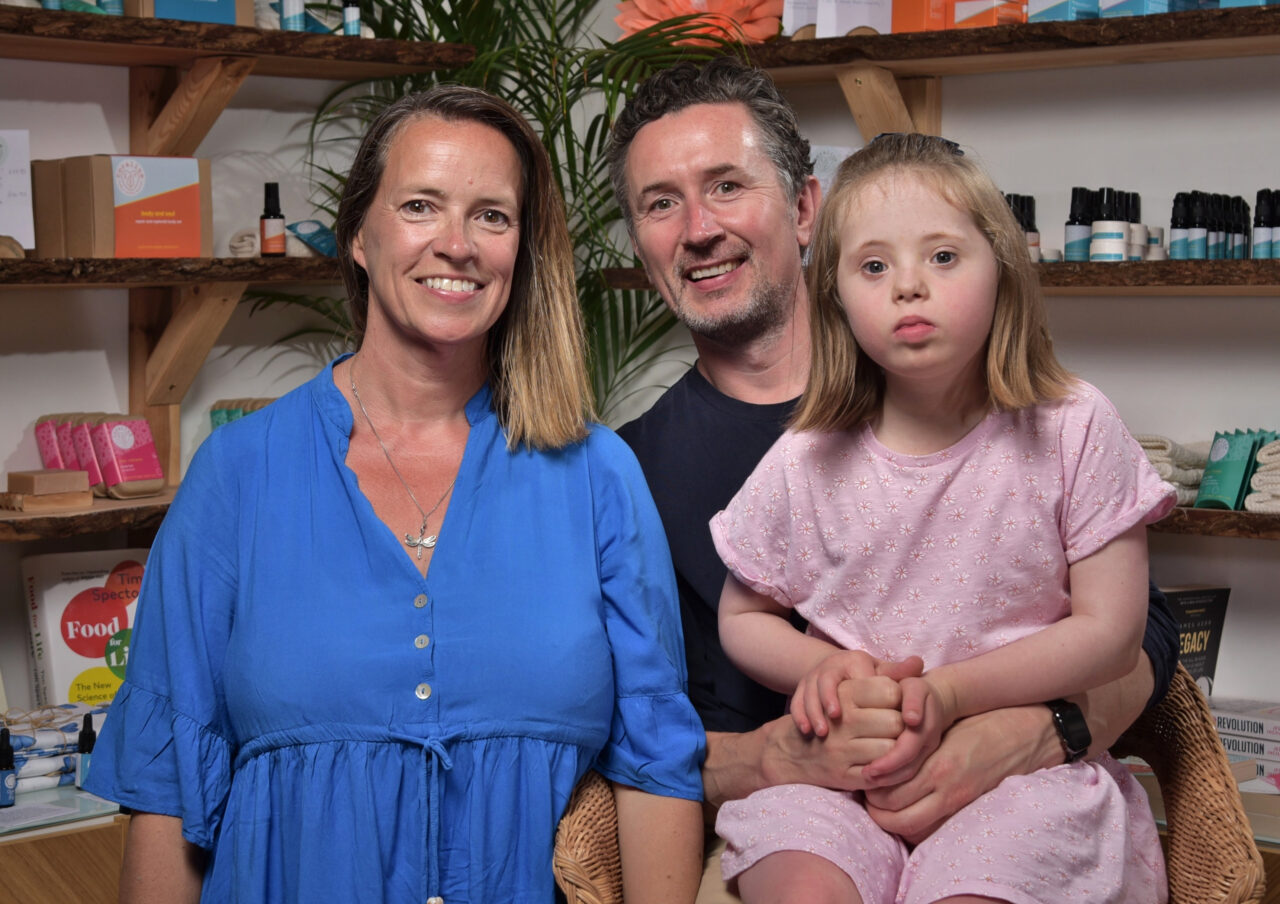
Liz Arriens-Troy lives in the estuary town of Topsham, Devon, with her husband Kevin and daughter Coraline, who has Down’s syndrome and suspected autism. Liz published her first book, Everybody Wants a Dance with Coraline, a memoir about Coraline’s first four years of life, in October 2025 (available on the Coraline Skincare website or on Amazon).
Together Kevin and Liz run their multi-award-winning organic skincare business, Coraline Skincare; all products are handmade by Kevin drawing on his years of experience with ingredients as a chef, and inspired by Coraline’s sensitive skin.
Read Liz’s blog here: www.dancewithcoraline.com
