5th November 2021 • My Family Our Needs
Breast cancer survivor Tracey Garcia, who works as Involvement & Engagement Manager at leading adult social care not-for-profit Dimensions, shares why Breast Cancer Awareness Month should be a watershed moment in our approach to supporting people with learning disabilities and autism around breast cancer.
Following Breast Cancer Awareness Month this October, I have been reflecting on how we can improve our support of people with learning disabilities and autism who have breast cancer.
The impacts of breast cancer are significant and wide reaching. Every year, there are an estimated 56,000 cases of breast cancer in the UK – that is 150 every day. It is one of the most treatable cancers if detected early and yet, as a result of the pandemic, an estimated 12,000 screenings have been missed this year.
I am a mother and a breast cancer survivor. I have been in remission for 1 year and 8 months after being diagnosed with Grade 3 aggressive Breast Cancer in August 2019 and have experienced first-hand the rollercoaster of emotions, sensory overload and distress this can bring. Now, I hope to shed some light on how to best support, and talk about breast cancer with, people with a learning disability and/or autism.
Tackling the health inequalities
Raising awareness of breast cancer amongst those with learning disabilities and autism who may not feel comfortable attending screenings is vital. Early detection is so important in cases of breast cancer and yet going to the doctors can often be a challenging experience for those with learning disabilities and autism.
In research by Dimensions as part of its #MyGPandMe campaign, 43% of disabled people said they felt worried when seeing the GP, while 33% said they felt stressed. It is essential that healthcare professionals work to combat these inequalities by offering as accessible an experience as possible, and that those who support people with learning disabilities and autism are aware of how to notice the signs when someone may need to attend a screening.
Family risk is a key factor when it comes to diagnosing breast cancer. I had annual mammograms until I was 50 because of my own family history, but when I consider the people that we support with learning disabilities and autism, so much of family medical history can often be lost and many don’t access regular health screenings. In fact, Dimensions 2017 research found that only 47% of women with autism and learning disabilities had attended breast screenings in the last two years. So, it is no exaggeration to say that making these screenings more accessible could save lives.
Providing a personal touch
As soon as I was told by my local GP that I needed to visit a local breast clinic, I was suddenly on a rollercoaster of fear, anxiety and confusion. Cancer screenings are overwhelming and being surrounded by compassion and familiarity is essential.
I had been to this breast clinic before, where I usually saw the same nurse but, this time, I was seen by a different health professional. The experience was uncomfortable and, for me, felt entirely devoid of any compassion. But for anyone with a learning disability or autism, this could be all the more overwhelming. Simple measures, such as having a familiar and consistent practitioner, or someone to help in advocating for you, can ensure people feel as comfortable as possible along the way and empower them to speak more openly about what might be troubling them.
Following on from this experience, I saw the same surgeon throughout. My surgeon Nicky is so warm, and, most importantly, I knew she genuinely cared about me. Being surrounded by the same compassionate people made such a difference to my personal experience and is all the more important for those who are also coping with additional sensory overload.
The need to feel heard
During this instance at the local clinic, I experienced first-hand the need for the patient’s voice to be heard. This is the moment where I wish I had spoken up and challenged her perspective, but fear quietened my voice. Shortly after, I was diagnosed with breast cancer.
It is important to remember that people with learning disabilities and/ or autism so often feel unheard or misunderstood in life. It is even more crucial that we ensure that their voices are heard in every conversation about their cancer treatment, not least as part of a commitment to coproduction in healthcare.
So, providing accessible information must be a priority. Easy-read resources can help to offer understanding of breast cancer to those with learning disabilities and autism – whether that’s someone who is experiencing breast cancer themselves, or seeing it take place in their family. Amongst others, Macmillan and Books Beyond Words provide fantastic easy-read resources around the topic of breast cancer, including ‘Breast Care for Women’ which explains how to notice changes in your breasts and ‘Getting on With Cancer’ which describes all the treatment stages of cancer.
Care, compassion and language
Fundamentally, it is compassion and love which must be at the heart of supporting those with breast cancer. A local charity called Chemogiftbags sent me a glorious bag of handmade items which reminded me I wasn’t alone. Things such as a heart shaped cushion, which I still use to ease the pain after my mastectomy, can truly make such a difference.
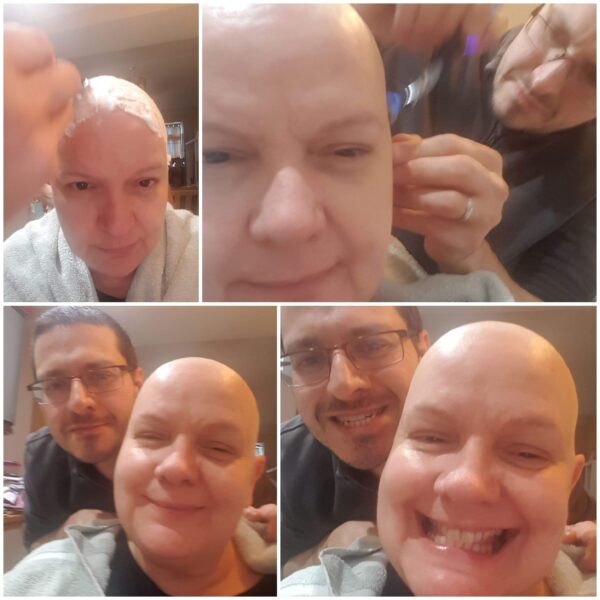
When I shaved my head, I was not prepared for the coldness and soreness that came as a result of chemo. Lots of hats and moisture cream soft pillows were essential. These small painful details of chemotherapy can be so much more difficult for those already struggling with sensory overload. Making Support Workers aware of these little touches which can make such a difference can ease the pain of cancer treatment for all.
‘Cancer’ also remains a terrifying word for so many people and so choosing language carefully is key. For example, my son has autism, and we didn’t want to use the word ‘cancer’ because of the associations. Instead, we focused on treating the lump, which he called Vladimir Lenin after a Russian Politician he had heard about on TV. He would tell the PICC line I had inserted to administer the chemo, ‘Thank you!’ because it was killing the lump.
Building hope
Cancer can still inspire so much fear in people, including in those with learning disabilities and autism, and making sure to choose our words carefully is the key to building acceptance and hope for ourselves and those around us.
When people describe cancer as a life sentence, they do not say so lightly. Since the end of my treatment, I have had two further scares and continue to take cancer drugs. Cancer can change people, so it is crucial we build positive networks of support and, most importantly, hope, wherever it might touch on people’s lives.
Tracey has worked in the social care sector for 35 years. She has worked with forward-thinking leaders and has developed her career from care officer to team leader, Registered Manager and Regional Area Manager specialising in preventative solutions and advocacy and bringing her career to its peak in her current role as Involvement and Engagement Manager for the group.
Tracey is renowned for her determination to consult the community Dimensions support so they are at the very heart of our unique work and is dedicated to enabling them to have greater involvement and influence through their valued roles as expert partners. Tracey enjoys a reputation for spotting and nurturing the potential in others and is responsible for recruiting, training, supporting and managing Dimensions Quality Consultants – a growing team of 50 plus people with learning disabilities and/ or Autism and supporting the roles of family members employed as experts by experience who bring an honest and powerful edge to, helping improve and influence the support Dimensions provides.
Tracey shares a keen and passionate view that anything is possible given the right support and encouragement – this has been a lifelong and guiding principle and has allowed Tracey to challenge, strive and sometimes struggle to ensure participation and influence by people she works alongside.