
26th February 2026 • My Family Our Needs
For many parents, a rare diagnosis brings a mixture of emotions: relief at finally having answers, alongside worry about what those answers mean.
In this How to blog, we explore the lived reality of parenting a child with a rare condition, offering reassurance, reflection and gentle guidance for families navigating the unknown.
What does ‘rare’ mean for families?
A rare diagnosis can arrive in many different ways. For some families, it follows a long period of uncertainty – years of appointments, referrals and ‘watch and wait’. For others, it may come during pregnancy or after birth, or suddenly after unexpected symptoms, developmental differences, or a medical event.
Clinically, a condition is typically described as rare when it affects a small percentage of the population. A rare condition might include genetic syndromes, neurological conditions, metabolic disorders, complex medical presentations, or multi-system conditions.
Examples may include conditions such as Rett syndrome, Prader-Willi syndrome, Williams syndrome, Batten disease, or Ehlers-Danlos syndromes, though there are thousands of rare diagnoses, many of which even experience professionals may encounter frequently.
You may find yourself navigating a world where symptoms can be unpredictable. Information may also be limited or evolving, and professionals may have little direct experience with your child’s condition. Support pathways and other families with similar experiences may be trickier to find.
Hearing phrases like ‘we don’t see this very often’ or ‘there isn’t much research yet’ can feel unsettling, particularly when you’re searching for certainty.
Rare can sometimes feel like living slightly outside the usual maps.
How do you parent when there isn’t a clear roadmap?
Parenting without a clear roadmap can feel unsettling. Many families are used to measuring progress against milestones or established expectations. When your child has a rare condition, those reference points may feel blurred, delayed, or entirely absent.
Instead of following a predictable path, you often become an expert in adaptation. You may find yourself closely observing your child’s unique patterns, learning through lived experience rather than standard advice. Advice may be inconsistent and outcomes may be uncertain.
Over time, many parents develop a confidence rooted in responsiveness, not certainty.
This can involve:
- Letting go of rigid timelines or expectations
- Trusting your day-to-day observations
- Recognising progress in smaller, meaningful shifts
- Accepting that understanding evolves over time
Parenting without a roadmap is often about building the map alongside your child.
What if professionals don’t have answers about my child’s condition?
Hearing ‘we’re not sure’ can be difficult, especially when you’re seeking clarity or reassurance.
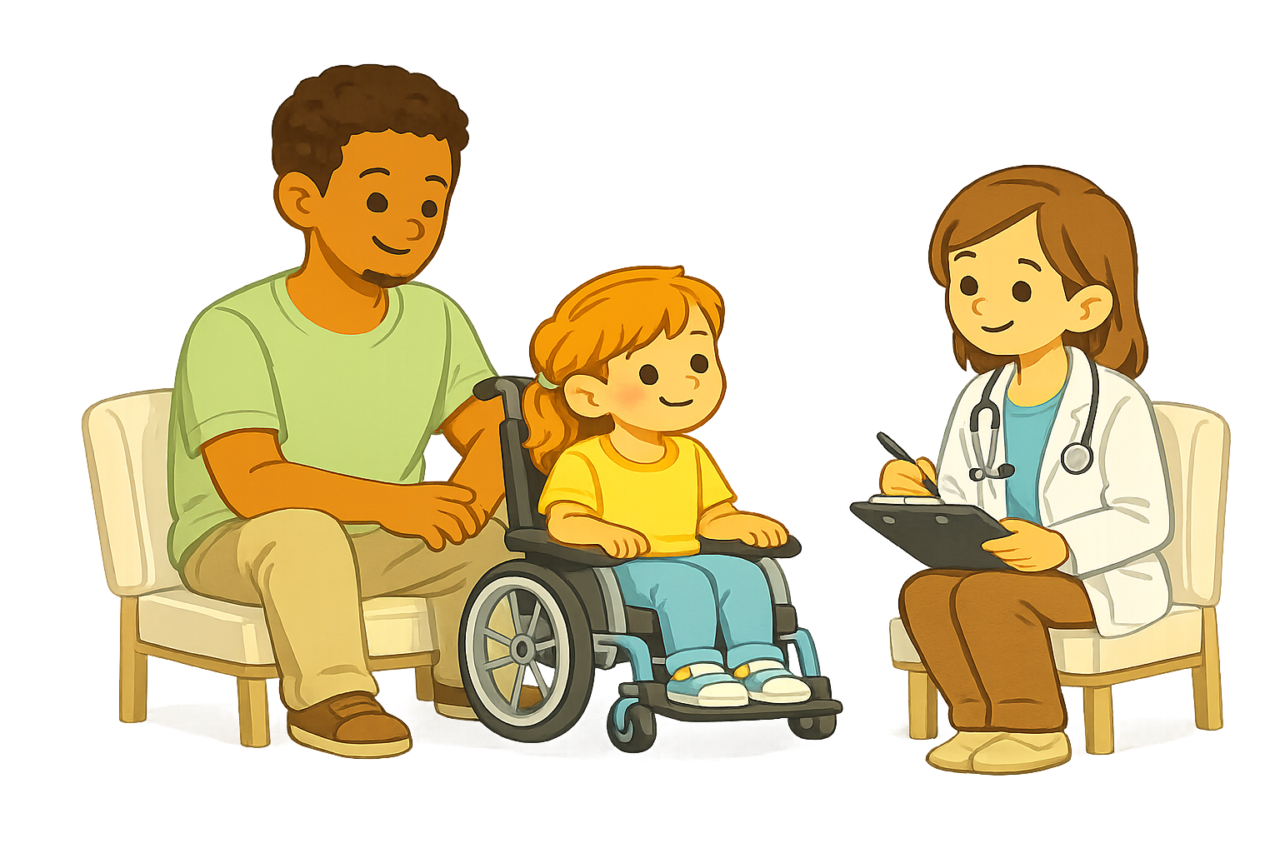
With rare conditions, parents often find themselves becoming the person who holds together information from difference specialists, therapists and lived experience, across appointments, services and settings.
This can feel heavy but it also reflects the depth of knowledge you develop about your child. Advocacy in this space don’t have to be confrontational – it can be collaborative and curious. Asking questions, requesting explanations, or sharing what you see at home are all valid parts of partnership working.
You are not expected to know everything, but what you know matters enormously.
How do you make decisions when information is limited?
Decision-making can feel confusing and exhausting when evidence is scarce.
You may face choices around treatments, therapies, education or daily support without the reassurance of clear research, established pathways or predictable outcomes. Even when professional advice is available, it may come with caveats, uncertainty, or differing opinions.
This can lead to decision fatigue. When every option feels significant, uncertain, or carries potential risks, the weight of responsibility can feel heavy. Parents often describe worrying about ‘getting it wrong’ or delaying decisions out of fear.
It reality, most families are not making perfect decision but rather considered, compassionate decisions in imperfect circumstances. Decisions are made through a balance of professional guidance, parental instinct, your child’s responses, and what feels manageable for family life.
What works wells for one child with the same diagnosis may not work for another. What feels right at one stage may need revisiting later. Many decisions are not once-and-for-all, but part of an ongoing process of adjustment.
It’s helpful to remember that few decisions are truly irreversible and flexibility is part of rare-condition parenting. Adjusting course is not failure.
Some parents may find it helpful to:
- Take time where urgency isn’t critical
- Ask questions or seek clarification
- Request second opinions if appropriate
- Weigh impact on the whole family, not just the intervention
- Accept that uncertainty is unavoidable
Doing the best you can with the information, support and capacity you have at the time is not a compromise. It is thoughtful parenting.
How do you explain a rare condition to other people?
Explaining your child’s condition can become a regular part of life. Some parents prefer brief, simple descriptions while others choose to share more detail depending on the situation. There is no universal script.
You are allowed to decide how much to share, simplify explanations, protect your emotional energy, and set boundaries.
How do you talk to professionals who may be unfamiliar with the condition?
Many parents worry about how to approach conversations when professionals have limited experience of a rare diagnosis.
Some families find it helpful to:
- Prepare a short summary of key information
- Describe the day-to-day impact rather than clinical detail
- Share strategies that help at home
- Ask collaborative, open questions
- Recognise that learning may be shared
These conversations are not about proving expertise, but about building understanding around your child.

How can you help your child feel included and that they belong?
Belonging can be a powerful feeling for children with rare conditions. Some children feel different from their peers, misunderstood, or as though they stand out in ways they didn’t choose. Others may experience a sense of invisibility where their condition is rarely recognised or understood, and they may have questions about identity as they grow older.
Families often support belonging by nurturing identity beyond diagnosis, focussing on strengths, interest, relationships and joy. Belonging grows in environments where children feel accepted as their full selves.
Belonging gradually develops though repeated experiences of safety, understanding and inclusion.
This might include:
- Encouraging friendships based on shared interest
- Supporting activities where your child feels confident or comfortable
- Helping others understand your child’s needs in simple, respectful ways
- Validating feelings about difference without amplifying them
- Celebrating individuality
- Sharing helpful strategies with school staff, supporting peer understanding or advocating for adjustments that allow participation
For many children, belonging is less about ‘fitting in’ and more about feeling safe to be themselves.
Is it normal to grieve after a rare diagnosis?
Many parents feel grief and it’s often more complex than expected.
Grief may not relate to losing your child as they are, but to adjusting expectations, imagined futures, or a sense of certainty. Many parents experience what is sometimes called ambiguous grief – feelings that coexist alongside deep love and pride.
Grief is not a sign of rejection but rather a reflection of adaptation.
How do you cope with uncertainty long term?
Living with ongoing unknowns can be emotionally tiring. Questions may linger in the background; ‘How will my child’s needs change?’; ‘What will school look like next year?’; or ‘What about adulthood? Independence? Support?’.
While uncertainty rarely disappears completely, many families describe finding ways to carry it more gently. This can involve focusing on what is known now, allowing plans to remain flexible, and recognising that understanding often evolves over time.
As children grow older, you may start thinking about independence, further education, employment, living arrangements, healthcare transitions and long-term support.
Independence
Independence looks different for every young person. For some, it may mean full autonomy. For others, it may involve supported or semi-independent living.
You can help by gradually building everyday life skills where appropriate, such as communication, decision-making, self-care and confidence. Independence is often developed in small, realistic stages rather than one major transition.
It can also help to explore:
- Preparing for Adulthood outcomes within the EHCP
- Local authority transition planning
- Supported living options in later years
Further education
Post-16 pathways may include sixth form, college, specialist provision or supported education programmes.
Early conversations with your child’s school, SENDCO or EHCP coordinator can help clarify options. Transition reviews (usually from Year 9 onwards) should begin considering aspirations, strengths and appropriate next steps.
You may wish to ask:
- What environments best suit my child’s needs?
- What support will be required?
- How will transitions be managed?
Employment
Employment may feel like a distant or uncertain topic, but many families find it helpful to think broadly about participation, purpose and strengths.
This might include:
- supported internships
- vocational courses
- voluntary work
- skill-building opportunities
- careers guidance
Living arrangements
Future living options may include remaining at home, supported living, shared accommodation, residential provision or other arrangements depending on needs.
You may find it useful to:
- explore local supported housing models
- seek information about eligibility criteria
- discuss long-term possibilities gradually
- consider financial planning where relevant
Healthcare transitions
Young people with ongoing medical needs will usually transition from paediatric to adult healthcare services.
This process can feel daunting, particularly where conditions are complex or rare. Asking healthcare teams early about transition planning can help families understand timelines, responsibilities and what support will be available.
You can ask:
- When will transition discussions begin?
- How will information be shared?
- Who will coordinate care?
Long-term support
Questions about adult social care, eligibility and funding are common sources of anxiety.
While adult services operate differently from children’s services, early awareness can be helpful. You may wish to learn about:
- Adult Care Act assessments
- eligibility thresholds
- personal budgets
- supported living services
Your child’s future may not be fully predictable but it is still full of possibility.

How do you find connection when your child’s condition is rare?
Connection may not always look like large, visible communities.
Some families find support through small online groups, condition-specific charities, SEND networks, or simply through relationships that offer empathy and understanding. Others build connection through professionals, friendships or shared experiences.
If you’re unsure where to begin, these organisations and resources may help:
- Genetic Alliance UK: provides information, advocacy and link to rare condition support groups.
- Rare Disease UK: a campaign that offers resources for families and works to improve awareness and services.
- Contact: support for families with disabled children, including advice, listening services and parent networks.
- SWAN UK (Syndromes Without A Name): a community specifically for families of children with undiagnosed or ultra-rare genetic conditions.
Your healthcare team or specialist may also be able to suggest relevant groups.
Rare does not have to mean alone.
Parenting a child with a rare condition can feel uncertain, overwhelming and, at times, isolating. It can also bring resilience, advocacy, creativity and deep connection.
There is not perfect way to navigate rarity, only your way shaped by your child and your family.