8th January 2025 • My Family Our Needs
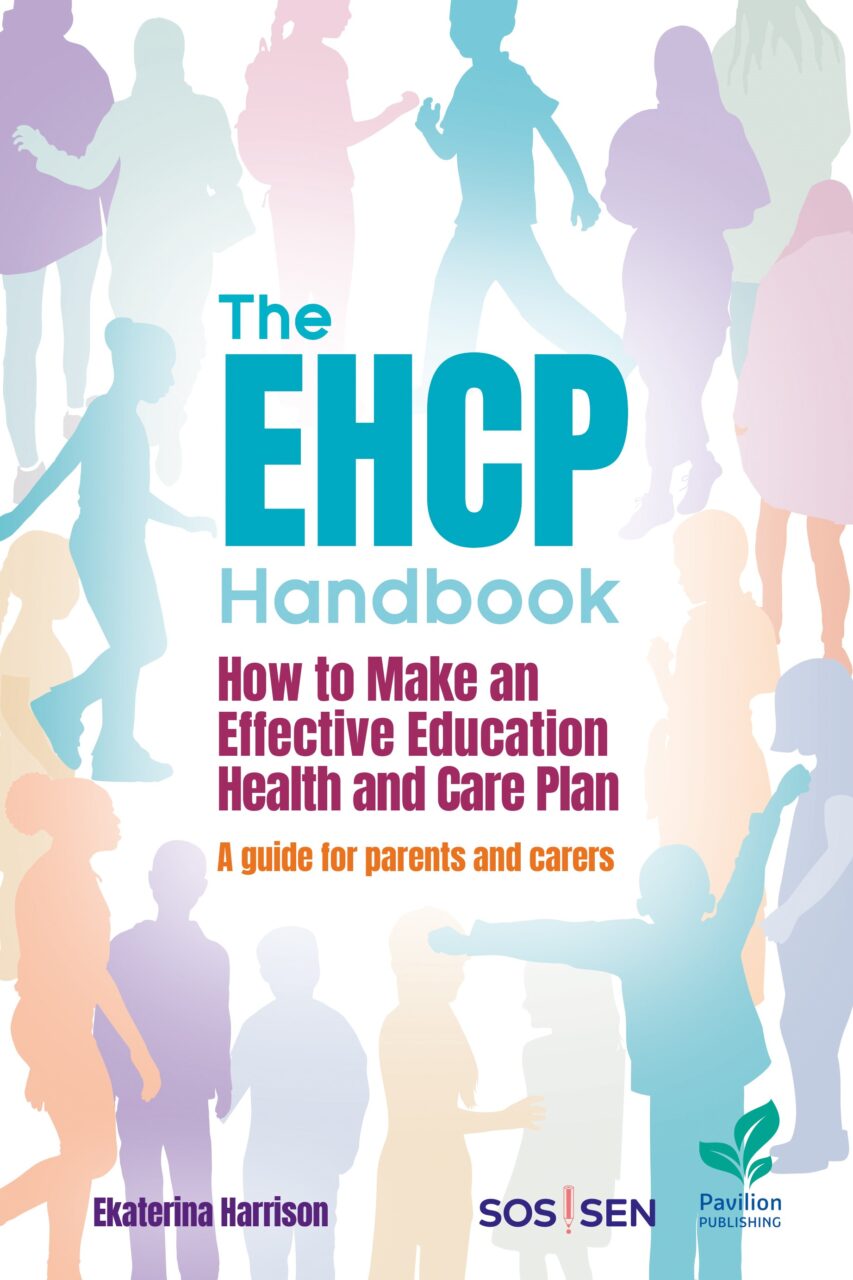
In this interview, we welcome Ekaterina (Katya) Harrison, author of The EHCP Handbook – How to Make an Effective Education Health and Care Plan: A Guide for Parents and Carers and her son James, who provided the illustrations, to discuss her book and the EHCP process.
We asked Katya about why she chose to write a book about EHCPs, the crucial steps of the process and her advice for parents navigating the different stages.
Can you tell us about your family?
There are five of us; me, my husband and three children.
James has a twin brother, Luke, and an older brother, George. We’ve been dealing with special educational needs for quite some time so securing accommodations at school and providing proper education has been on our minds for a very long time.
I’m trained as an English solicitor and so over the years, fighting for EHCPs, school places and everything in between has made me quite skilled in education law.
Why did you decide to write a book about EHCPs?
I started writing the book when I was preparing for my twins’ transition to secondary school as securing an appropriate placement didn’t come without the fight. I wanted to share knowledge with others. I chose to write about EHCPs because I think knowledge about them is fundamental for anyone dealing with or involved in the special educational needs system.
I started to look at how to make it accessible, especially to readers who might have special educational needs themselves and I’m a good example. In my family, we’re all neurodivergent.
I realised that my legal explanations require some visual representation of concepts. This is where James’s illustrations came in. First, James drew backpacks belonging to different children to highlight the unknown contents inside the school bags. This serves as a metaphor for how, when seeing a child who might be neurodivergent, you may not even know what they are carrying – whether physically or emotionally.
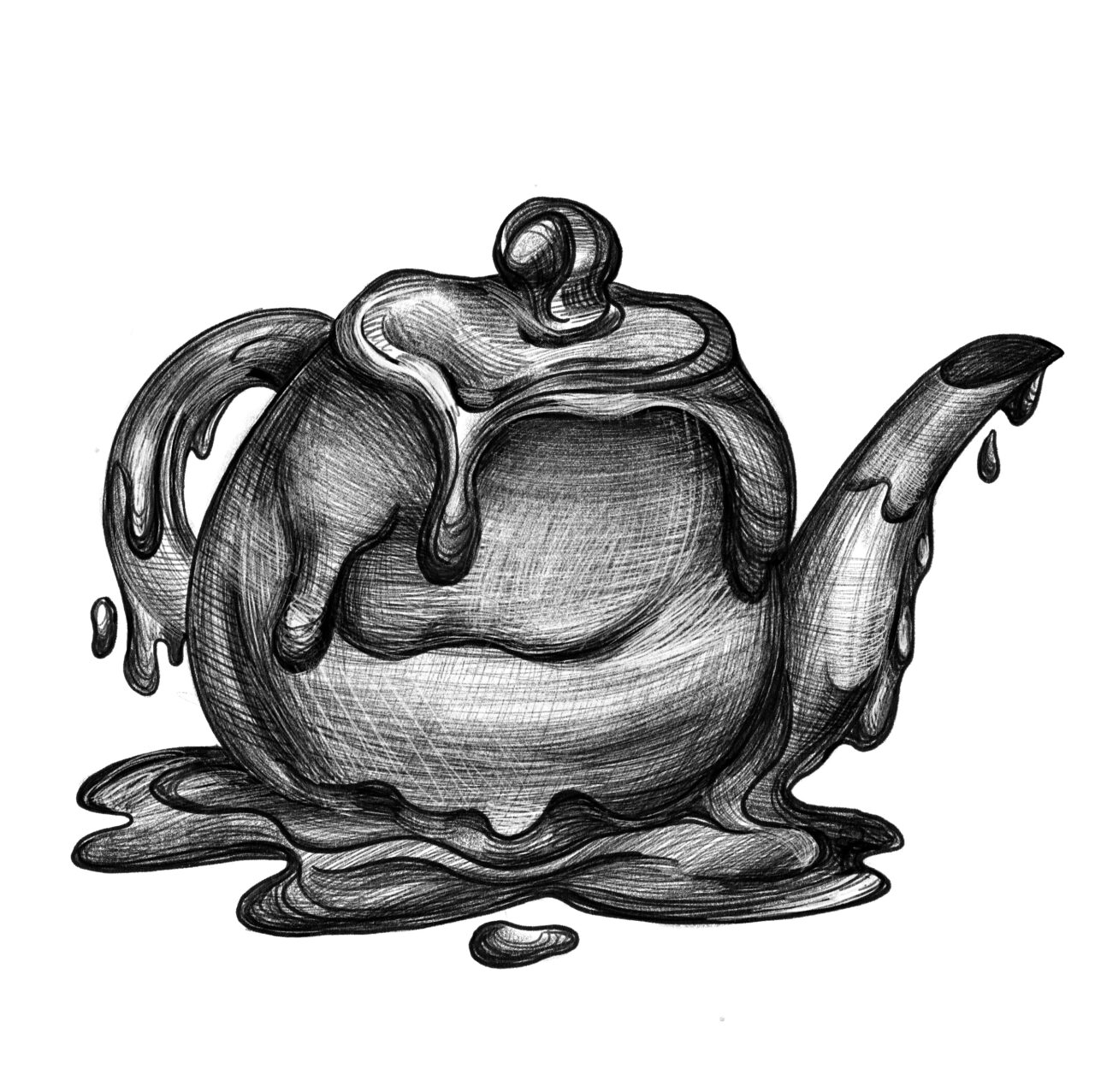

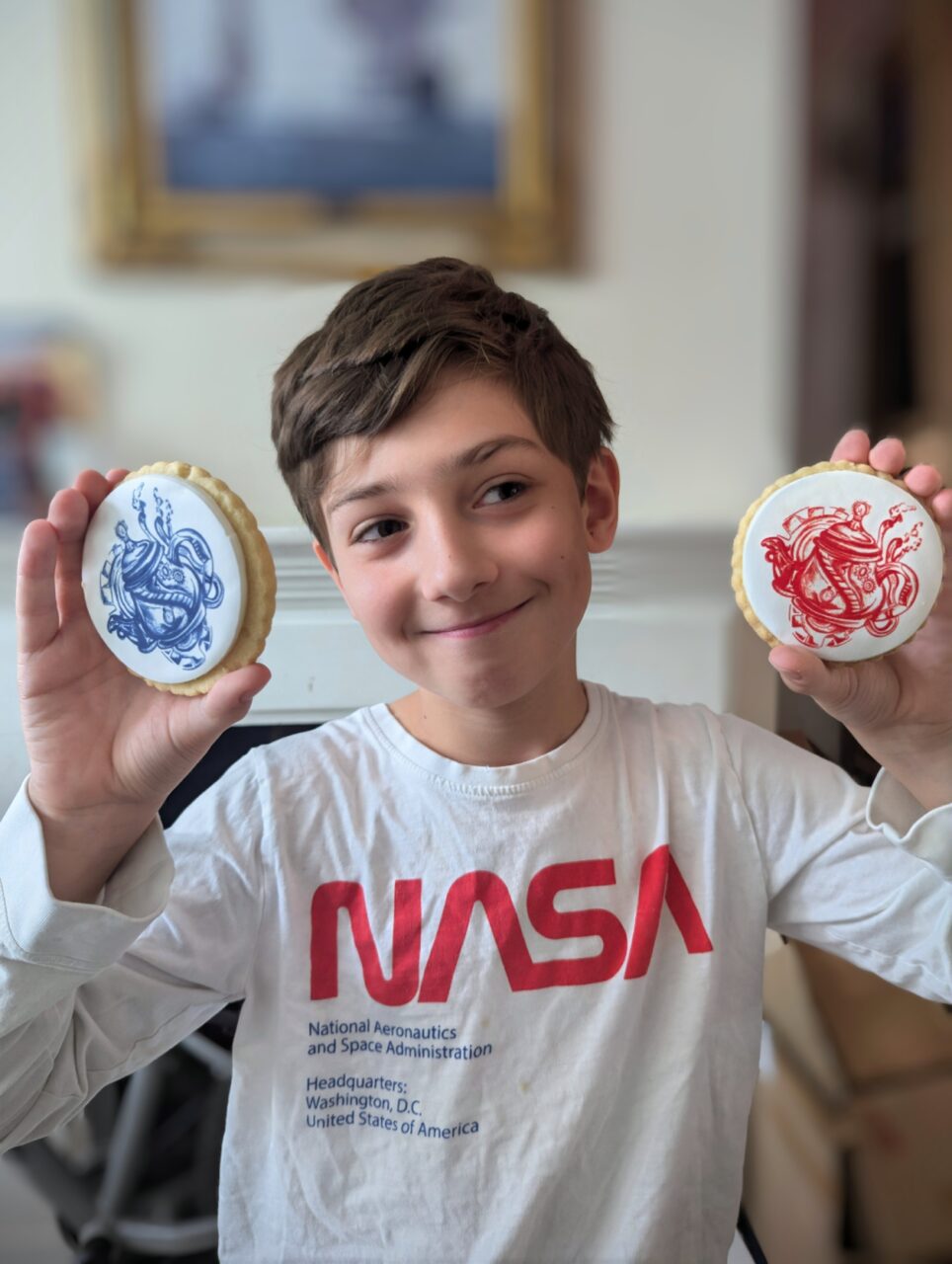
EHCPs are often quite vague. A lot of families seek advice and want to know how they can get what their child is entitled to when the plan is not very specific. We came up with the idea of a chocolate teapot to illustrate how a plan might appear beautiful and well-written, but when put into practice, it melts away, leaving you without any meaningful support. To contrast this, James also drew me a sturdy steampunk teapot which symbolises a robust and working EHCP with everything a child can possibly need to help with their special educational needs.
The field of special educational needs is not an easy subject to navigate because some people may feel stigma or shame and sometimes have trauma. In my book, James’s drawings play an important part in ensuring people aren’t intimidated by the dry legal language. I wanted the child’s voice to be heard through the pages so you don’t forget what the book’s subject is truly all about.
So, the purpose of the book was to be optimistic and to make the reader feel better whilst educating themselves with legal knowledge which would help them secure their child’s legal rights. It contains detailed information but at the same time, I hope that it is accessible and anyone can read it. It was designed so parents can engage and get as much knowledge as possible.
How did you and James find working together and how did James come up with the ideas for his drawings?
James has been drawing from an early age and it’s one of his special interests. I had some trouble finding illustrators for my book and James offered to help. It naturally all came together. The voice and illustrations of my child who himself has special educational needs are included in the book.
Are there any specific chapters or sections from the book that you want to highlight to help understand what it’s about or how it can help parents?
So, the book itself is structured to lead you to the main subject, which is the contents of the plan. I begin by introducing the concept of a chocolate teapot. If all the plans were perfect, we wouldn’t need the concept.
I start by using a visualisation exercise where I liken the EHCP to a book which can be understood in sections with different levels of importance and urge parents to concentrate on where they will get maximum impact.
It leads on to give you a general legal knowledge about laws in this area. Then it explains how information for the plan is collected from the experts and why it is important. Plans usually just repeat what experts say so if the expert evidence is not great, the plan is not going to be good either.
I also included a chapter on self-advocacy, especially for young people turning 16 and above as it’s important for them to start getting engaged and understand their entitlements. If willing and able, they can start taking control of their education from the moment rights pass to them.
Different people will find different chapters of interest to them. It’s good to read it in the way it’s structured but people can jump to different sections and read them first. Every chapter has something very special about it with crucial information.
Every EHCP is so unique to each child’s needs. How are you making it accessible to all levels of need?
The book is written with all special educational needs in mind. While it is dedicated to neurodivergent children and young people, whose experiences are close to my heart, the content remains inclusive and supportive of everyone who needs help.
Importantly, the EHCPs distinguish between education, health and social care. So, if the child’s needs vary on these levels, the book provides guidance on addressing the requirements in each category.
There are exercises in the book which allow to take any need and look through the test prism and decide what’s needed for the child to learn, to stay healthy and to benefit from social care. I tried to provide useful tests so these judgments could be made.
For example, my eldest child has an eating disorder and it was always considered a health need but it’s not just that. He needed to be educated about how to manage his anxiety about food so eventually, we moved it under the education section of his plan.
What would your advice be for a parent at the beginning of their EHCP process?
Stay calm and carry on.
There is a chapter on evidence in the book. Quite often, people overlook the evidence stage and do not scrutinise expert reports enough and they end up with weak text in the EHCP. My advice would be to be vigilant from the very beginning and look at what advice you’re given. Is it actionable or is it discretionary? You need to be tuned in from when the process starts, not when you have a draft EHCP.
This is very important because at the draft stage, it’s almost too late to make changes and it’s very painful. But if you start reading and educate yourself on how things should look in the expert reports from the very beginning, you will get much better results in the end.
Is there anything you would like to add?
The artistic side of the book is very important because I think it helps to blur the lines between the field of special needs and the world at large. The more those lines fade, the more inclusion thrives.
And if James’s art helps people to see it this way, I think that the job is done.
If you’d like to find about more about making an effective EHCP, you can purchase Katya’s book here.

Ekaterina Harrison is a solicitor qualified to practise law in England and Wales. As an autistic woman and a mother to three neurodivergent children, she brings a unique perspective to her writing on special needs and legal entitlements. Her expertise in education law has developed through advocacy work for her children’s needs and volunteering with the charity SOS!SEN.
The illustrations inside the book are by Ekaterina Harrison’s son, James (age 11). He exhibited at the Royal Academy Young Artists’ Summer Show in 2023.